
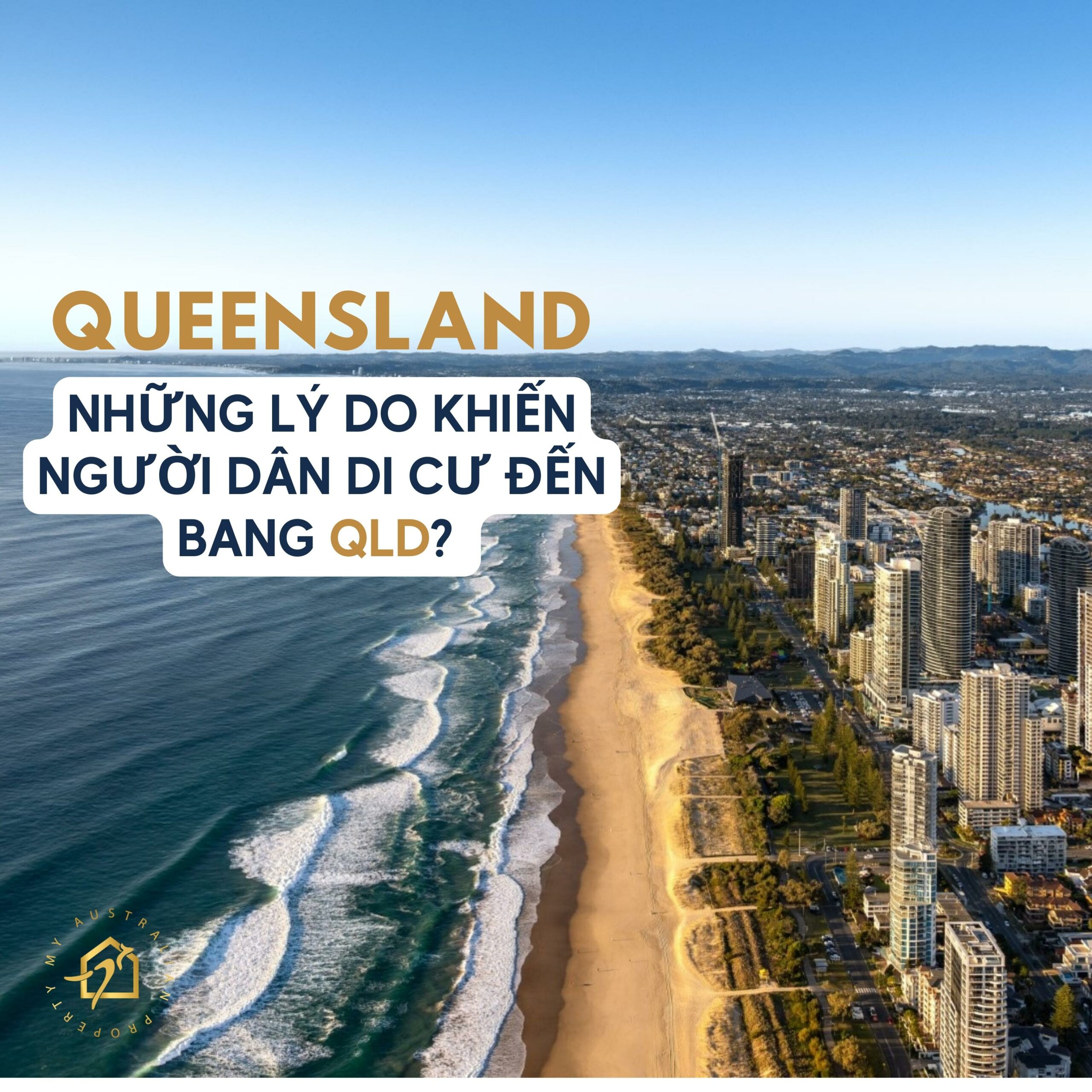
What Are the Reasons Why People Migrate to Queensland?
Not everyone, but Census data released this week shows that in the five years to 2021, more people moved to Queensland from regional Australia than any other state or territory.
Census data shows more people moved interstate to Queensland than any other state or territory in the five years to 2021.
The sunshine state’s net population growth from people moving domestically eclipsed Tasmania and the ACT in the five years to 2021, which were the only other two states to record gains from domestic migration.
Queensland’s population growth due to interstate movement of residents was more than 10 times greater than in the ACT – a net increase of 107,500 compared to 10,600. Tasmania recorded a population increase of more than 15,300 people.
Aude Bernard, a demographer at the University of Queensland, said the migration of Australians to the state was not a new trend.
“Queensland has been a major destination in Australia since the 1970s and probably before that – so really, this is just an acceleration of existing trends,” she said.
Ms Bernard said affordability, weather and lifestyle factors were big draws for those coming to the state.
“I also think what’s changed is that people have really realized that Brisbane is a viable destination – that it has a strong economy. There are lots of events and services that people can get involved with and this has obviously been made easier by working remotely to some extent,” she said.
Opportunity and lifestyle
Freelance photographer Matthew Poon and his family moved to Brisbane from Perth last August and he says they’ve enjoyed the change.
“She was looking for opportunities to progress and develop her career and there weren’t many options in Perth. There were plenty of opportunities in Brisbane, Sydney and Melbourne,” he said.
In the end, they liked the idea of Brisbane better, so Mr Poon’s wife got on a plane to meet potential employers and returned with three lucrative job offers.
Ms. Quek is not the only new resident to the state in an investment management role.
“Half the staff are from Sydney or Melbourne because they all moved here during the pandemic,” she said.
Benefits
The family is enjoying life in Queensland.
They bought an apartment in a Brisbane suburb and enrolled their two children in a nearby school.
While Mr Poon said their house might cost a little more than if they bought the same thing in Perth, it was still much less than what they would have spent if they chose to move to Melbourne or Sydney.
He said facilities in Brisbane were much better than in Perth, especially the public transport network and local government facilities such as children’s playgrounds.
“And there are a lot more things to do closer to where we live in Brisbane than in Perth,” Mr Poon said.
He loves that he can wear shorts in the Queensland winter and he adds that his daughters are also enjoying the benefits.
The more tropical climate means the children have not suffered from eczema – an irritated skin condition – since moving, as they often do when they return home to Western Australia.
Mr Poon, who has built relationships and a reputation as a freelance photographer in Perth, said work had increased in recent months after having to settle down in his new location.
He said he used the adjustment period to take on more parenting and housework responsibilities.
The family has not yet decided how long they will stay in Brisbane.
While the idea of returning to Perth to be closer to Mr Poon’s extended family is always present, the prospect of being in Brisbane when the city hosts the 2032 Olympics is also appealing.
The state most people are leaving
The interstate net migration figures also highlight which state many of those moving to Queensland came from.
New South Wales recorded a death toll of more than 102,200 people.
McCrindle social researcher Ashley Fell said issues such as housing affordability, congestion and infrastructure bottlenecks in New South Wales were driving people out of the state.
“Congestion, waiting times are quite high in New South Wales and at one point house prices in Sydney were 14 times the average annual income, so there are a lot of reasons why people don’t want to live in NSW,” she said.
The Northern Territory, Victoria, WA and South Australia recorded net population losses across states, with the lowest being 1,600 people and the highest loss being 13,400 people.
Related articles


Treasurer Jim Chalmers officially announced the 2026 Australian Federal Budget, focusing on reforming the tax system and enhancing national security in the context of inflation and global geopolitical turmoil. Housing Policy Reform The government focuses on addressing the housing and tax system to support the younger generation (Millennials and Gen Z) through systemic changes. From […]

The Federal Government has officially announced its 2026-2027 budget, with reforms to Australia’s real estate, tax system and increased housing supply aimed at helping more Australians own their homes. Support home ownership and increase supply Australian property tax reform: Change regulations on negative gearing and capital gains tax (CGT) incentives. The changes are estimated to […]

The birth of the Metro West line is not simply a transportation solution; it is symbolic of Sydney’s transformation into a connected megacity. With a record investment of up to 27.3 billion Australian dollars, the project promises to unlock the potential for tens of thousands of luxury apartments, turning areas along the route into the […]