
Australian Federal Budget 2026 – What are the advantages for Australian real estate investors
Treasurer Jim Chalmers officially announced the 2026 Australian Federal Budget, focusing on reforming the tax system and enhancing national security in the context of inflation and global geopolitical turmoil.
Housing Policy Reform
The government focuses on addressing the housing and tax system to support the younger generation (Millennials and Gen Z) through systemic changes.
From July 1, 2027, the “negative gearing” policy for residential real estate will only apply to new home projects. Reforms to encourage investment in new home construction instead of acquiring existing real estate.
National Fuel Security Package
In response to the energy crisis and risks from international conflicts, the Government announced a fuel security package worth more than 10 billion AUD, including:
– Emergency reserve: AUD 3.2 billion to establish a Government-owned fuel reserve, containing 1 billion liters of diesel and emergency aviation fuel.
– Business support: 7.5 billion AUD in financial support (loans, insurance) for fuel companies to increase storage.
– Increase reserve levels: Increase the mandatory reserve period for gasoline to 37 days, diesel and jet fuel to 50 days.
Increase Defense Spending
The government commits to increasing defense spending to 3% of GDP by 2033 (according to NATO standards):
– Supplementary budget: AUD 53 billion over the next ten years.
– Key projects:
+ Invest up to $130 billion in enhancing undersea combat capabilities.
+ $12 billion establishment of the Henderson Defense Complex, (Western Australia), servicing AUKUS nuclear submarines and building Mogami-class destroyers.
Package to Reform the Immigration System, Tax Incentives and Cut Administrative Procedures
The government is implementing 14 legislative reforms, including raising corporate reporting thresholds, which will save $780 million in compliance costs each year. At the same time, regulators also implemented 13 solutions to streamline the financial data collection process.
Permanently extend the AUD 20,000 instant asset write-off policy for small businesses, have revenue less than $10 million, starting July 1, 2026.
One of the most notable contents is the plan to reform the immigration points system. Change the scoring system to select highly skilled workers and speed up the process of recognizing international qualifications.
National Disability Insurance Scheme (NDIS)
The Government aims to save $37.8 billion through reform of the national disability insurance scheme (NDIS) to make the scheme more sustainable and in line with its original targets.
Direct Tax Deduction for Employees
A new tax break worth $250 per year is expected to benefit more than 13 million Australian workers. This policy adds an additional AUD 1,000 invoice-free deductible.

Australian workers on average incomes can save up to A$2,816 per year after tax deductions are applied.
Additionally, the Government will replace the 50% capital gains tax (CGT) reduction with an inflation-based reduction and introduce a 30% minimum tax rate from 1 July 2027. This reform means investors will only pay tax on actual capital gains, restoring the original purpose of the capital gains tax (CGT) regulations.
Transportation Infrastructure and Electric Vehicle (EV) Taxation
– Transport infrastructure: Maintain infrastructure investment plan with total capital of more than 120 billion dollars within ten years. This budget includes more than $8.6 billion for new and ongoing nationally significant projects.
– Adjusting electric vehicle incentives: Cutting tax-free incentives (FBT) for electric vehicles to save 1.7 billion AUD for the budget.
* Note:
– From April 2027: Tax exemption only applies to vehicles under 75,000 AUD; Vehicles above this level are subject to 75% of the normal FBT tax rate.
– From April 2029: All electric vehicles will be subject to 75% FBT tax.
Source: What will be in tonight’s federal budget? Here are the major measures we know about so far. 2026. ABC News
Related articles


The Federal Government has officially announced its 2026-2027 budget, with reforms to Australia’s real estate, tax system and increased housing supply aimed at helping more Australians own their homes. Support home ownership and increase supply Australian property tax reform: Change regulations on negative gearing and capital gains tax (CGT) incentives. The changes are estimated to […]

The birth of the Metro West line is not simply a transportation solution; it is symbolic of Sydney’s transformation into a connected megacity. With a record investment of up to 27.3 billion Australian dollars, the project promises to unlock the potential for tens of thousands of luxury apartments, turning areas along the route into the […]
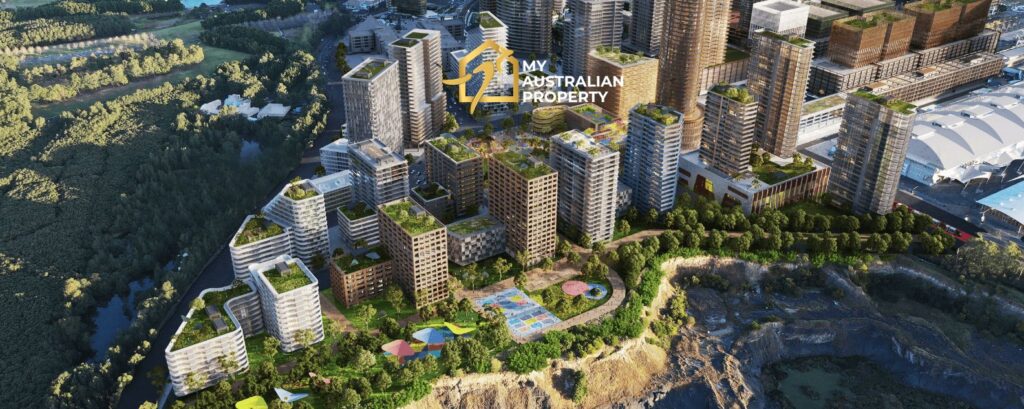
(MAP) The New South Wales state government has just officially approved the Sydney Olympic Park Master Plan 2050. This is not only a major urban plan but also a “signal” for investors looking for opportunities in the Australian real estate market. With the orientation of becoming a multi-purpose megacity, Sydney Olympic Park promises to become […]