
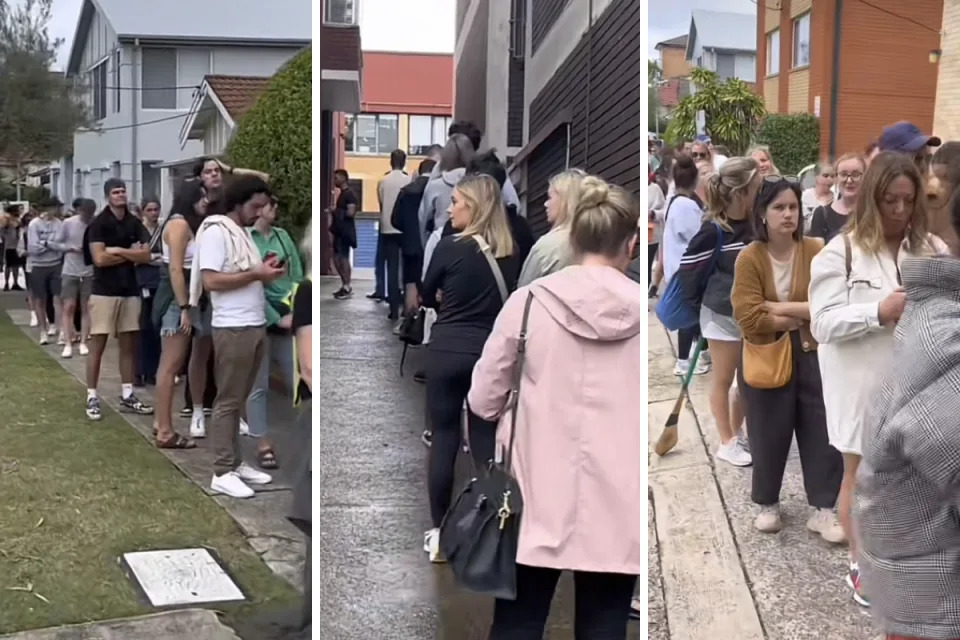
SYDNEY’S RENT PRICES ARE INCREASING POST
Sydney house rents have increased more than 10% in the past year, reaching an all-time record in this city.
According to the latest Domain Rent report, renters in Sydney’s inner city areas are facing record high apartment rents through March. Even in midtown and suburban areas, the rental market has seen significant jumps.
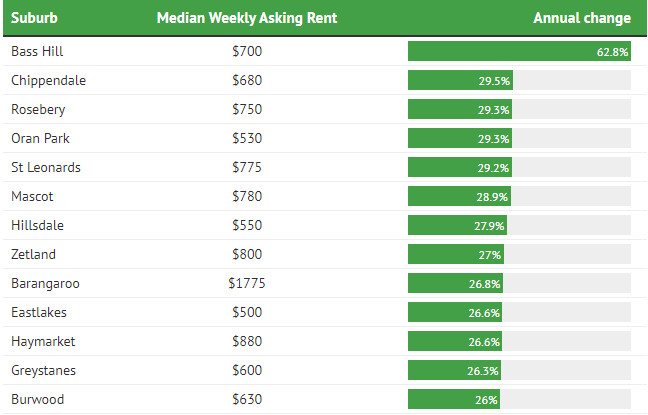
Average apartment rents increased sharply to AUD 375 per week in Barangaroo, AUD 270 in Bass Hill and AUD 150, even higher, in popular student suburbs such as Chippendale, Haymarket and Zetland. Emphasizing that all of them increased much higher than in 2018 – the time before the pandemic.
Not only the apartment segment, rental rates in half of the analyzed areas also reached the 10% threshold in the past year. The Rose Bay area had the largest increase when the average rent increased by 55.6% within a year, equivalent to 750 AUD, to 2100 AUD and is currently 31.3% higher than in 2018.
Average prices are only recorded for suburbs with a minimum of 30 apartments introduced in the past year.
In Sydney, apartment rents increased 24% to AUD 620 per week, the fastest annual growth since Domain recorded. Along with that, house rental prices also skyrocketed by 10%.
According to Dr. Nicola Powell – Domain’s director of research and economics, rising rents due to the strong return of immigrants and international students has exacerbated the shortage of rental apartments, especially in inner-city and eastern areas, many of which encountered many difficulties in the early stages of the pandemic.
“It’s challenging for tenants to find somewhere with stable rents,” she said. “Some areas have reduced rents but…they are not markets with great demand.”
High living costs have a significant impact on the demand for apartment rentals, according to Powell. This could lead to consolidation of households. Contrast that with the fragmentation into small households early in the pandemic – which the Reserve Bank estimates could create demand for 140,000 homes.
“But it is difficult to imagine that rents will stabilize or decrease in the near future, when the apartment vacancy rate is at a record low (0.9%)” Powell said.
Jessica Warner (a tenant) is moving out of her one-bedroom apartment in Lane Cove, after the weekly rent increased by AUD 130, almost double the average increase of AUD 70 in the area.
“I was expecting rents to increase by about AUD30-50 per week (based on similar apartments), so that’s quite a bit of pressure,” says Warner.
All her efforts to negotiate having failed, Warner filed a claim with the NSW Civil and Administrative Tribunal (NCAT). A few days later, she received an eviction notice when the landlord announced that a family member was coming to stay.
After being turned down at about a dozen places, she rented an apartment in Willoughby. So lucky to find a new place to live.
“There was an apartment in Camperdown with about 200 people there. However, the traffic was so bad that I didn’t even go to see it.”
Warner does wish there would be strict regulations in place on rent increases and strong protections to prevent retaliatory evictions — a move both political parties support ahead of the state election.
Jarden chief economist Carlos Cacho said more action is needed to address the housing crisis, but he does not support imposing a cap on rents.
“It’s a dangerous situation and there are no easy solutions,” he said. “When it comes to helping households get through periods of rent stress, income support is a far better solution than enacting policies that limit supply.”
The crisis was caused by many factors – including the formation of smaller households during COVID and the strong return of immigration, which put a lot of pressure on the market, Cacho said.
Tenant representative Sarah Elkordi from The Rent Fairy commented that: “houses are snapped up quickly and advertised rents sometimes increase by hundreds of dollars due to strong demand.”
Areas such as Zetland and Eastlakes, which were previously affordable, have seen rent increases as they become more popular with international students and small families, Elkordi added, adding that they are priced higher than other markets. Many of her clients are now international students, whose parents have offered to pay six to twelve months’ rent in advance.
“There are no vacant apartments… I have a client who moved from Zetland because their rent went from AUD750 to AUD1200 for a two-bedroom, one-bathroom apartment,” she said.
Related articles


Treasurer Jim Chalmers officially announced the 2026 Australian Federal Budget, focusing on reforming the tax system and enhancing national security in the context of inflation and global geopolitical turmoil. Housing Policy Reform The government focuses on addressing the housing and tax system to support the younger generation (Millennials and Gen Z) through systemic changes. From […]

The Federal Government has officially announced its 2026-2027 budget, with reforms to Australia’s real estate, tax system and increased housing supply aimed at helping more Australians own their homes. Support home ownership and increase supply Australian property tax reform: Change regulations on negative gearing and capital gains tax (CGT) incentives. The changes are estimated to […]

The birth of the Metro West line is not simply a transportation solution; it is symbolic of Sydney’s transformation into a connected megacity. With a record investment of up to 27.3 billion Australian dollars, the project promises to unlock the potential for tens of thousands of luxury apartments, turning areas along the route into the […]