

Australian Real Estate Market Report July 2025
Australian real estate is experiencing a strong recovery in July 2025, driven by interest rate cuts and other policies. However, low supply and affordability challenges remain key factors impacting the market.
Australian real estate market trends show acceleration again
Australian housing values have shown a significant acceleration in Q2 2025:
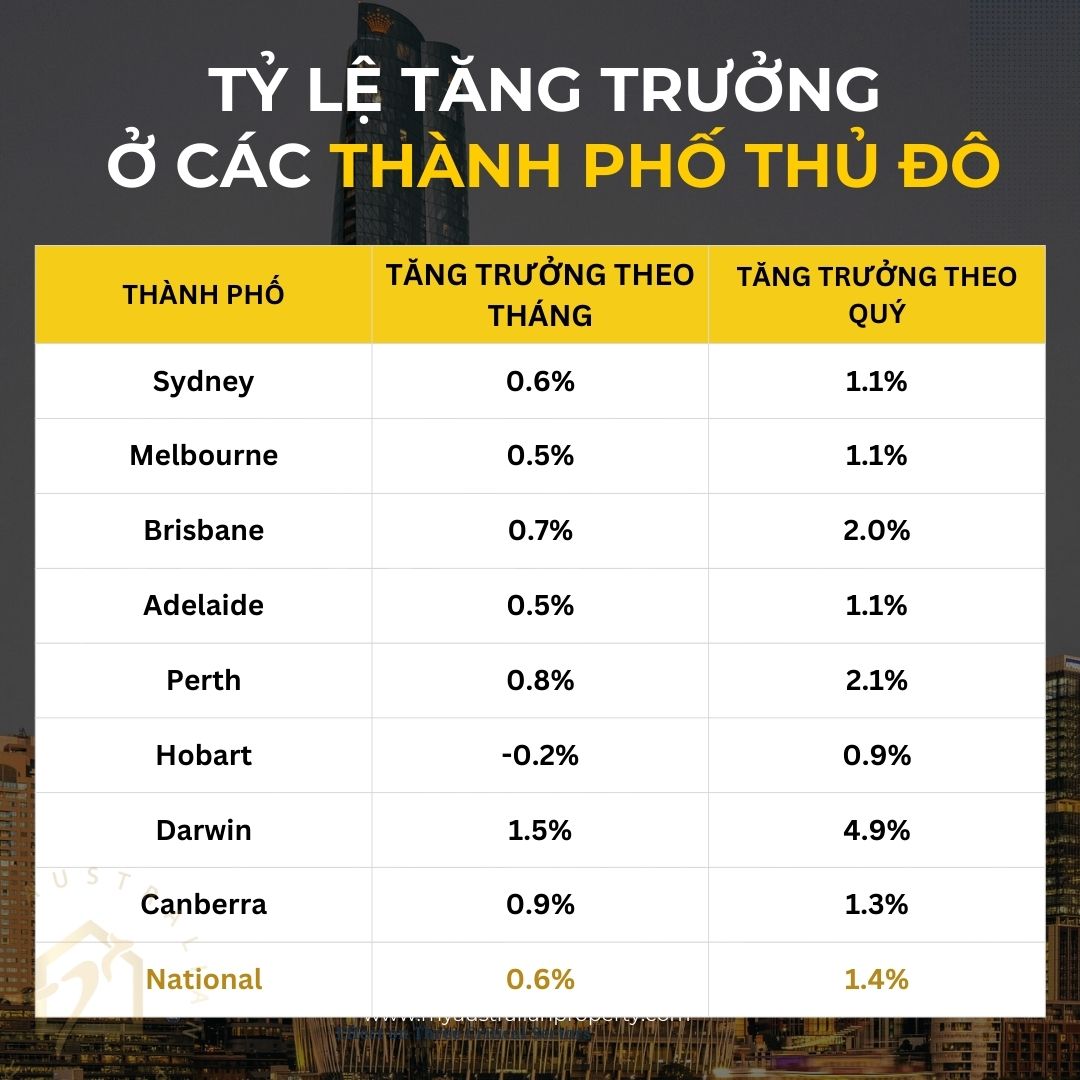
- Monthly growth: National house prices rose 0.6% in June, marking the fifth consecutive month of growth following a period of decline from November to January. Most regions recorded increases, except Hobart which is currently recording a -0.2% decline.
- Quarterly growth: In Q2, national house prices increased by 1.4%, following the increase of 0.9% in the first quarter of the year. All other capital cities and regions recorded growth, except Regional Tasmania which decreased -0.4%.
According to Cotality’s Director of Research, Mr. Tim Lawless, the interest rate cuts in February and May, along with forecasts of further cuts, are clear catalysts for new growth momentum.
SEE MORE: How much has the Australian government cut interest rates?
The national house price change in the current financial year is 3.4%. If the quarterly pace is maintained, the country’s annual growth rate is expected to be 5.8%, higher than the average of 5.2% over the past decade. It is expected that home values may increase further in the next 12 months as interest rates continue to decrease.
Real estate growth rates among Australian capital cities
For two consecutive months, capital cities have recorded clear monthly growth, much higher than suburban areas. Quarterly growth in the suburbs is still slightly higher at 1.6%, but this trend is expected to shift to the city soon.
Capital cities led quarterly growth, including:
- Darwin: Strongest increase with 4.9%/quarter
- Perth: Increase 2.1%/quarter
- Brisbane: Increase 2.0%/quarter
Perth and Brisbane are also leading the five-year growth trend, with values increasing by 81.1% and 75.1% respectively since June 2020.
In addition, Sydney is recognized as one of the cities with the highest average housing price in Australia reaching $1,210,222, a 5-year growth rate of 34.4%. In contrast, Darwin and Hobart are the two cities with the lowest average housing values in Australia at $537,471 and $677,390, respectively.
Fluctuations in the Australian real estate rental market
Rental growth has varied across Australia, specifically:
- Quarterly growth: The national rental index increased by 1.3% in Q2. Of which, ACT recorded the lowest increase of 0.3%, followed by Melbourne and Adelaide by 0.7%. Darwin stands out with the strongest increase of 2.9%, followed by Brisbane with an increase of 2.0% and Sydney with an increase of 1.5%.
- Vacancy Rates: The vacancy rate remains stable at about 1%, much lower than the 5-year average before the pandemic (3.3%).
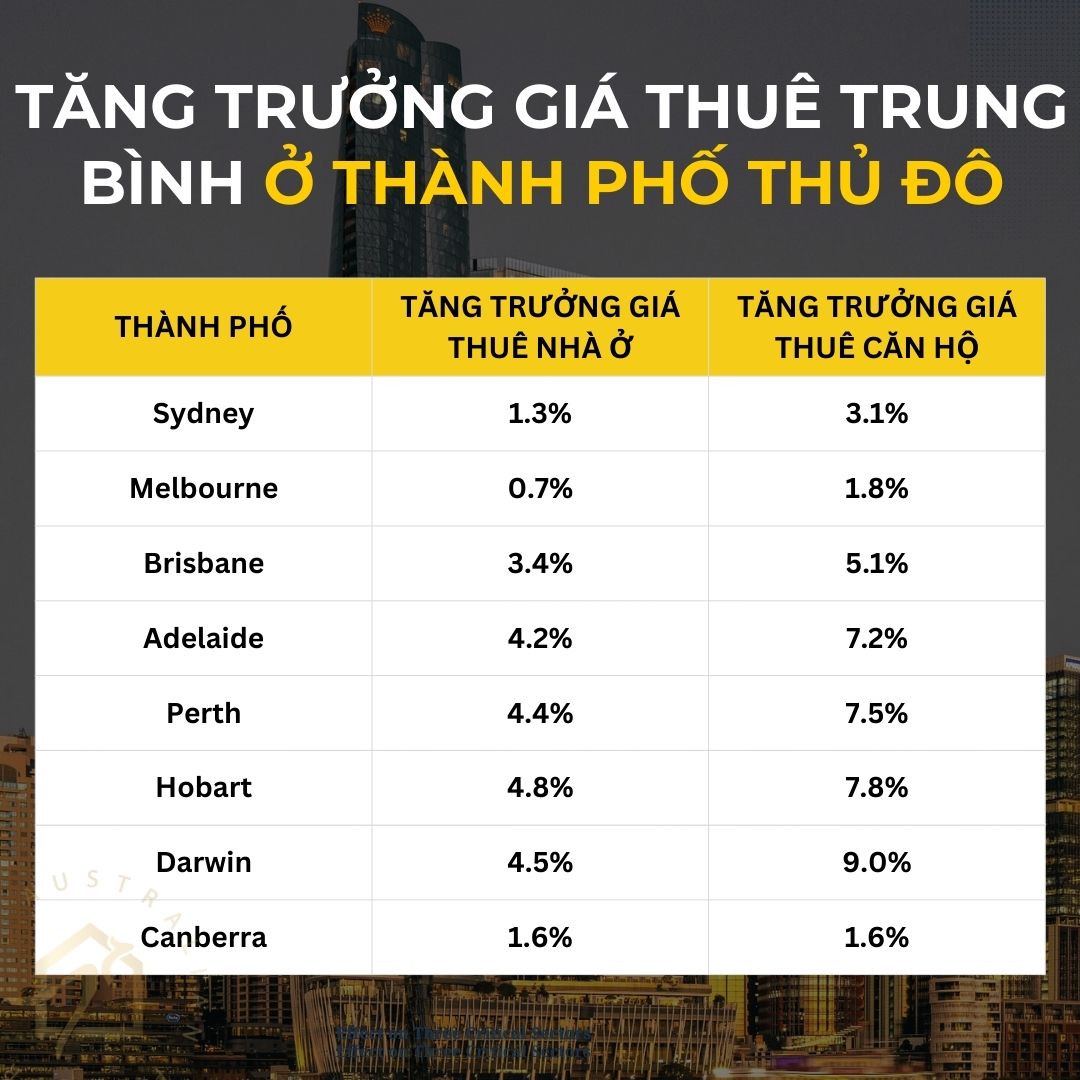
For private rental prices, Melbourne is currently recording the lowest annual growth of just 0.7%, followed by Sydney with 1.3%. In the apartment segment, the lowest rental growth was in ACT (1.6%), Melbourne (1.8%) and Sydney (3.1%).
In contrast, Hobart and Darwin topped annual rent growth, at 4.8% respectively; 4.5% for housing rent and 7.8%; 9.0% for apartment rental price.
Factors affecting the Australian housing market
- Lower interest rates help improve the ability to borrow and repay debt, support consumer sentiment and boost housing demand.
- The unemployment rate remains at about 4.1% since the beginning of 2022, helping to improve affordability at the present time.
- Although housing approvals increased slightly, new supply remained below average and well below target. This is likely to put further upward pressure on Australian property prices.
For both investors and homebuyers, closely monitoring reports and policy developments will be the key to making wise decisions in this potential market.
Follow the latest information about the Australian real estate market and attractive products through My Australian Property’s official information channels such as Facebook, Tiktok or Youtube
Source: Cotality HVI. July 2025
Related articles


Treasurer Jim Chalmers officially announced the 2026 Australian Federal Budget, focusing on reforming the tax system and enhancing national security in the context of inflation and global geopolitical turmoil. Housing Policy Reform The government focuses on addressing the housing and tax system to support the younger generation (Millennials and Gen Z) through systemic changes. From […]

The Federal Government has officially announced its 2026-2027 budget, with reforms to Australia’s real estate, tax system and increased housing supply aimed at helping more Australians own their homes. Support home ownership and increase supply Australian property tax reform: Change regulations on negative gearing and capital gains tax (CGT) incentives. The changes are estimated to […]

The birth of the Metro West line is not simply a transportation solution; it is symbolic of Sydney’s transformation into a connected megacity. With a record investment of up to 27.3 billion Australian dollars, the project promises to unlock the potential for tens of thousands of luxury apartments, turning areas along the route into the […]