

11 REASONS TO INVEST IN AUSTRALIAN REAL ESTATE
Why should you invest in Real Estate in Australia?
Most investors are always looking for ways to increase active income. Investing in real estate may be the most popular and profitable investment method today, but this is not really an easy thing.
Time and effort to learn and accumulate market knowledge is a prerequisite in this field, not simply buying and reselling and benefiting from price differences.
This process can take place in the following cycle:
- Research and search for suitable real estate investment areas.
- Calculate and optimize costs to get the best preferential price.
- Not stopping there, when buying and selling real estate in Australia, it is necessary to negotiate a loan and find a lawyer to assist, this process can take 1-2 months.
- After buying a home, you must take the time to manage it yourself or find a trustworthy property manager.
It sounds really complicated for those just starting out in this market. That’s why many people ignore real estate and simply put their money into other products like stocks or managed funds.
But if you persevere to the end, investing in this field will indeed bring worthy fruits. Some examples are many people who have become financially independent, accumulated their own assets and changed their lives.
And more importantly, many investors have found a formula to build a real estate investment portfolio that brings many values such as:
- Great capital growth, allowing net asset value to increase.
- Guaranteed income that progresses over time (helps you pay your mortgage).
Therefore, real estate must be considered the key to accumulating assets.
Below are reasons to give you new perspectives when investing in real estate in Australia:

1. The success of millionaires
If you compare the results that others have achieved, you will see that real estate is an extremely effective profit channel.
According to the AFR Rich 200 list published annually, real estate is always the main source of wealth for Australian millionaires. And this is the same around the world.
New investors also often give priority when investing in this channel. There’s nothing wrong with looking at the methods of successful people, especially millionaires, and adapting those principles to suit you.
Most of the extremely wealthy people in Australia have used real estate to make a huge profit, so there must be a reason for this.
2. Easy to do
Real estate investing is not just for the rich.
It really doesn’t take a lot of money to get into real estate.
Because banks in Australia will lend up to 95% and sometimes even 100% on residential property, this means that most Australians have a stable job and some capital to afford an investment property.
Smart use of real estate can help ordinary Australians easily become real estate millionaires in about 10 years, this has been proven.
If you really intend to become one of the rich people in the future, you should seriously consider this channel.
3. Easy to do
One of the reasons why this is the safest and most profitable investment market in Australia.
Perhaps economic crisis periods and real estate cycles are things we often hear about. However, the basic trend of real estate values in large urban areas is still growing steadily.
This is a safe investment.
Banks always recognize real estate, especially the residential real estate segment, as an asset that ensures absolute safety.
This has been proven because banks will allow you to borrow up to 80% of the property value. In fact, the entire Australian Banking system is built on the continued growth of residential real estate.
Another factor that contributes to the safety of the residential real estate market is its size.
Corelogic has estimated that there are 10.6 million residential properties in Australia with a total value of around A$8.4 trillion.
And the total outstanding mortgage debt on these properties is A$1.9 trillion – in other words, the total loan-to-value ratio of all listed Australian properties is 27%.
But what’s really special about the residential real estate market is that owners, that is, people who own or pay for their own homes, own about 70% of these properties.
Investors own the remaining 30%.
Residential real estate is the only investment market that is not dominated by investors, and this effectively provides investors with a built-in safety net.
Even if all investors leave the market at the same time, the market will not completely collapse.
The 70% homeownership rate also has another advantage– the majority of the markets we invest in do not perform by conventional criteria.
If times get tough, most homeowners do not panic and rush to sell their homes like what can happen in other industries such as the stock market,…
So while real estate prices fluctuate over time, influenced by supply and demand, this market will always remain stable.
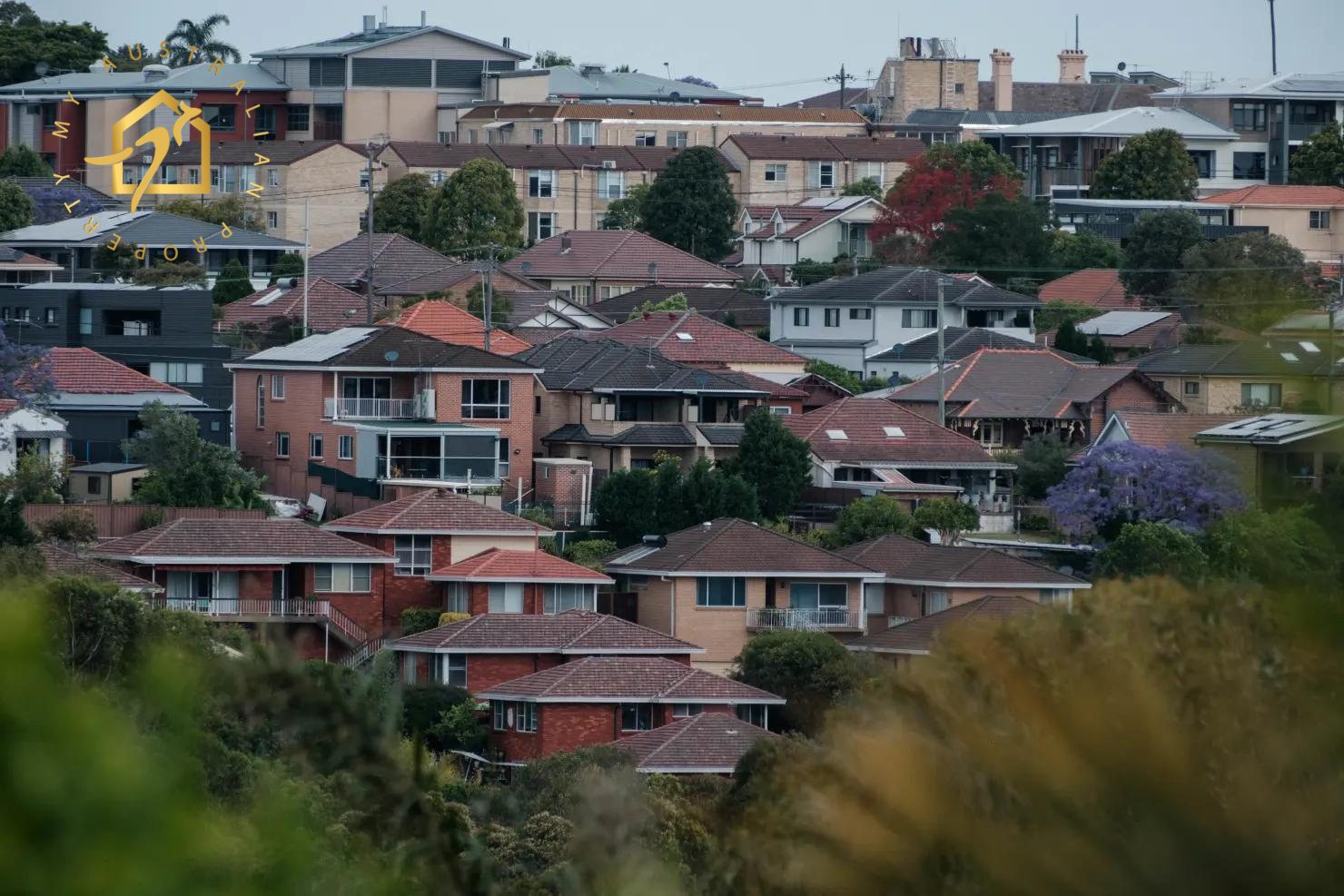
In fact, 53% of Australian households’ wealth is in housing.
Another factor that increases the safety of residential real estate is a private insurance package that is considered an investment against most risks. Make sure the building is not subject to fire or damage. Besides, it is possible to insure yourself against the tenant leaving and breaking the lease contract.
4. Income growth
Income received from real estate in Australia provides excellent value for lending and financial leverage to help you pay mortgage interest.
Will this continue in the future?
Over the years, rental income received from real estate investments has increased and this increase has outpaced inflation.
In fact, statistics show that home ownership levels are decreasing in Australia.
It is predicted that the percentage of tenants will gradually increase.
There are many reasons for this, but especially as real estate prices continue to rise, fewer and fewer people can afford to buy their dream home.
We know that the government is struggling to provide social housing, which means there are plenty of opportunities to make money, especially if owning a property meets future rental needs.
5. Stable capital growth
Residential real estate in major cities has outstanding and consistent capital growth. Over the past 45 years, average property values in Melbourne and Sydney have doubled every seven years or more.

However, in the short term, the market picture is much more complicated. Sometimes capital growth stops and even reverses for a time, as we saw in the early 1990s and the recession from 2003 to 2006.
Across all major Australian cities, this growth has averaged just under 10%, compounded annually over the past 25 years.
This is just an average.
Buying real estate at below market price and then increasing its value, this will also contribute to capital growth and rental income.
If a property increases in value by 10% per year (averaged over a number of years), the value of that property will double in 7 years.
Imagine you own a property worth A$700,000.
Within seven years, the same asset will be worth $1.4 million and within 14 years, this will become $2.8 million. What an extremely impressive number!
After 7 years, if you have an outstanding bank loan of A$560,000 (assuming you have an interest-only loan) and your net worth will increase from A$140,000 to A$840,000 (A$1.4 million property value minus the initial A$560,000 mortgage.)
Your net worth increases sixfold even though the value of the real estate only doubles.
What will happen in the next 7 years?
The property will once again double in value to around A$2.8 million and your net worth will increase to A$2.2 million.
Your initial A$100,000 investment will grow 16 times while your real estate will only grow 4 times.
The above incredible increase in net worth is due to the combined effects of compound interest and leverage.
6. No need to invest maximum capital
A little secret will be revealed below:
The return on real estate if you pay all cash (no debt) will not be much higher than other types of investments.
Of course, with real estate, you usually don’t pay in cash; instead, it is a way of using other people’s money to buy your assets.
That is, you will have to deposit a deposit of usually 20% and the rest will be supported by the bank.
This is called leverage.
Archimedes said: “Give me a fulcrum and I will move the earth.”
As investors, we don’t want to move the earth, we just want to buy as much as possible!
The ability to use leverage with real estate significantly increases profits and, more importantly, it allows for the purchase of a significantly larger investment than is normally possible.
With a safe history, proven stable income and capital growth, real estate is mainly considered collateral for mortgage, which means banks can lend up to 90% of the property value.
Other types of investments will not be loaned at this rate.
When buying bank stocks, the bank lends about 65% of the value of the stock and only 70% of the value of the commercial property.
This makes residential real estate an attractive vehicle.
Technically, leverage, also known as shifting, means using a small effort to move a large object, like pedaling a small rotation to turn the large wheel on a bicycle.
In a financial context, leverage is using a small amount of money to control a large asset.
This is done by borrowing money and mortgaging your property and using the loan money to invest in a larger property.
The higher the leverage level, the more money you can borrow and the lower your investment capital compared to the loans.
As you can see from the examples above, the higher the degree of leverage, the greater the profit.
However, note the duality of leverage, it not only increases profits but also increases risks. If the investment value decreases, the loss will also increase.
7. Control ability
Australian real estate is a great investment option because of the ability to fully control the profits from the owner’s assets.
In case the profit generated is not good, the owner can increase value through renovation, repair, and interior decoration to make the apartment more attractive to tenants.
In other words, you can directly impact profits by understanding and meeting the needs of potential customers.
8. Tax Benefits
Tax benefits are an important factor in investing. We will have a separate article on this issue.
9. Increase real estate value
There are hundreds of ways to add value to assets, which will increase income and capital value.
Start with very simple things like painting, replacing or brightening the floor, etc. Or you can do other renovations and upgrades.
10. Long-term investment
Unlike most other investments, when real estate values increase, you don’t need to sell to take advantage of that increase in value. Just go back to the bank or mortgage broker and ask the bank to increase the loan amount.
11. Cumulative investment
Even if you buy the worst apartment at the most inopportune time, chances are it will still appreciate in value over the next few years.
“An inch of land equals an inch of gold”, history has proven that real estate can be the safest investment asset over time. The potential is very high when you hold them.
There is no other asset class like real estate!
If you are wondering how to invest at this stage of the real estate cycle, contact My Australian Property now!
Related articles


Treasurer Jim Chalmers officially announced the 2026 Australian Federal Budget, focusing on reforming the tax system and enhancing national security in the context of inflation and global geopolitical turmoil. Housing Policy Reform The government focuses on addressing the housing and tax system to support the younger generation (Millennials and Gen Z) through systemic changes. From […]

The Federal Government has officially announced its 2026-2027 budget, with reforms to Australia’s real estate, tax system and increased housing supply aimed at helping more Australians own their homes. Support home ownership and increase supply Australian property tax reform: Change regulations on negative gearing and capital gains tax (CGT) incentives. The changes are estimated to […]

The birth of the Metro West line is not simply a transportation solution; it is symbolic of Sydney’s transformation into a connected megacity. With a record investment of up to 27.3 billion Australian dollars, the project promises to unlock the potential for tens of thousands of luxury apartments, turning areas along the route into the […]