

The house rental market in Australia has officially cooled down after a record fever
The house rental market in Australia has officially cooled down after a record fever. Rents across Australia increased by 0.4% in the fourth quarter, which is considered the lowest increase since 2018.
The year 2024 recorded a slowdown in national rental price growth, with an increase of 4.8% over the same period last year, after a strong increase of 8.1% in 2023 (according to CoreLogic’s latest real estate rental report).
The result marks the lowest annual rent increase in the 12 months to March 2021, when rents increased by 3.6%. Although this number is still high compared to the pre-pandemic average, it shows that the national rental market has officially cooled down after the peak fever.
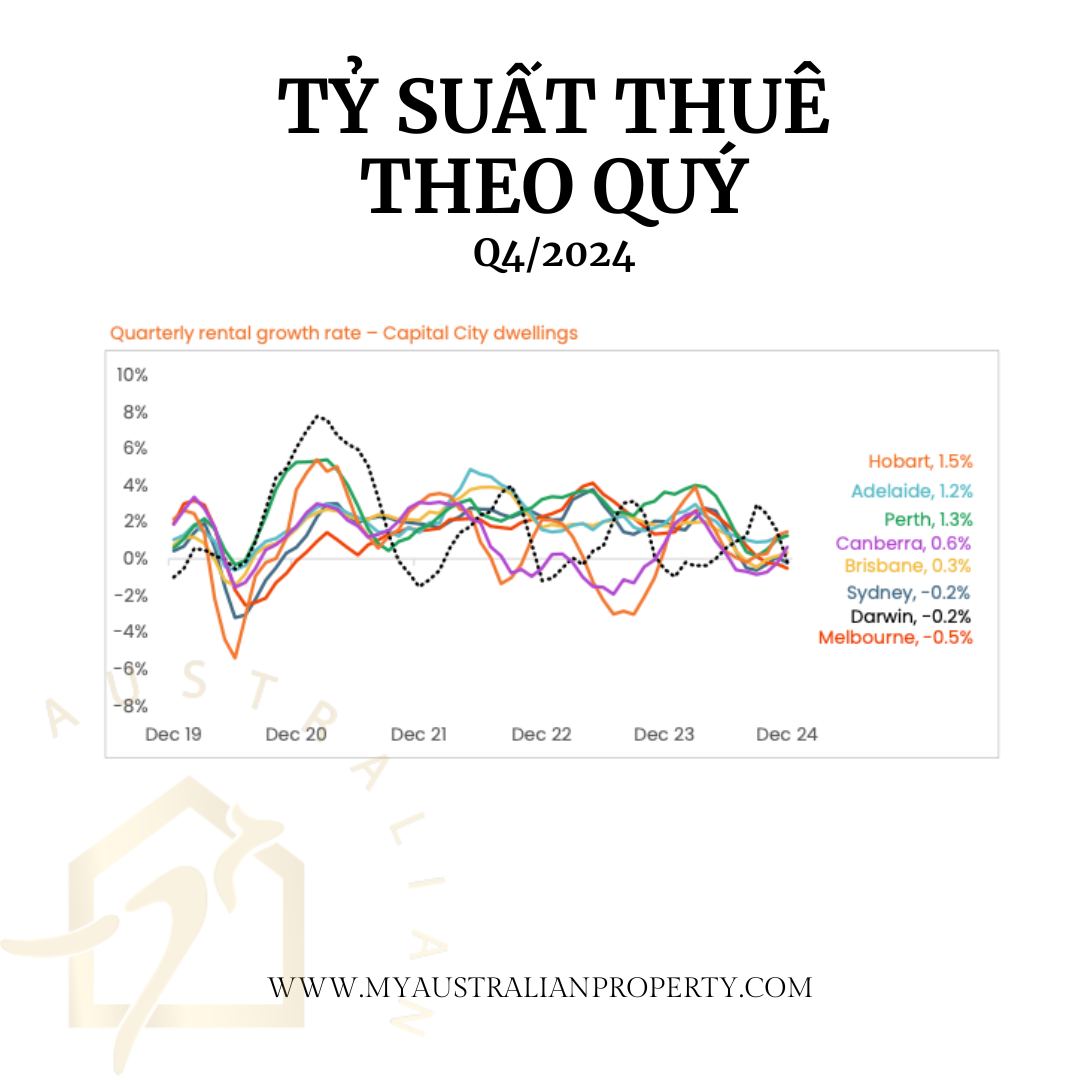
The reason why growth in the rental market nationwide has stagnated
According to CoreLogic economist Kaytlin Ezzy, there are several reasons for this situation: affordability.
She said since the COVID-19 pandemic broke out, the national average rent price has increased 36.1%, equivalent to an increase of $171 per week, about $8,884 per year.
As of September 2024, tenants must spend 33.0% of their annual pre-tax income to pay rent.
In addition to affordability, Ms. Ezzy also believes that changes in supply and demand have directly impacted the growth rate in the rental market.
“The decline in net international migration is a factor reducing rental demand, with net international migration expected to be around pre-COVID-19 levels in FY26/27.”
“On the supply side, the value of new investment loans increased 26.3% from the beginning of the year to September 2024. The increase in investors led to an increase in net rental supply.”
Increasing supply and reducing demand has helped the vacancy rate change, from a low of 1.4% in November 2023 to 1.9% by the end of 2024.
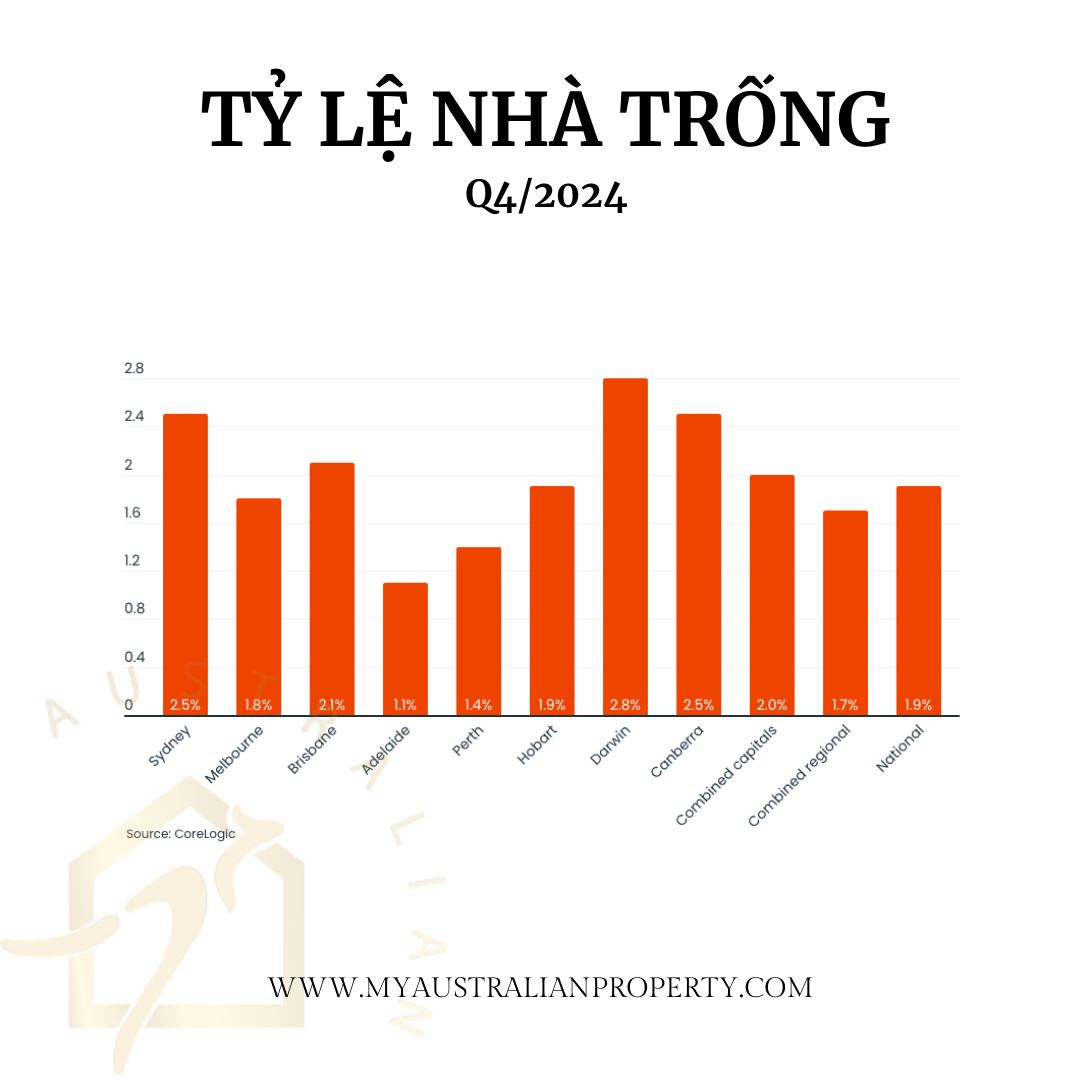
Overall rental market across Australia
In the capitals, most cities recorded a slowdown in rental growth during the year, with Sydney and Melbourne gradually decreasing from 9.9% and 11.0% in 2023 to only 3.0% and 4.1% in 2024.
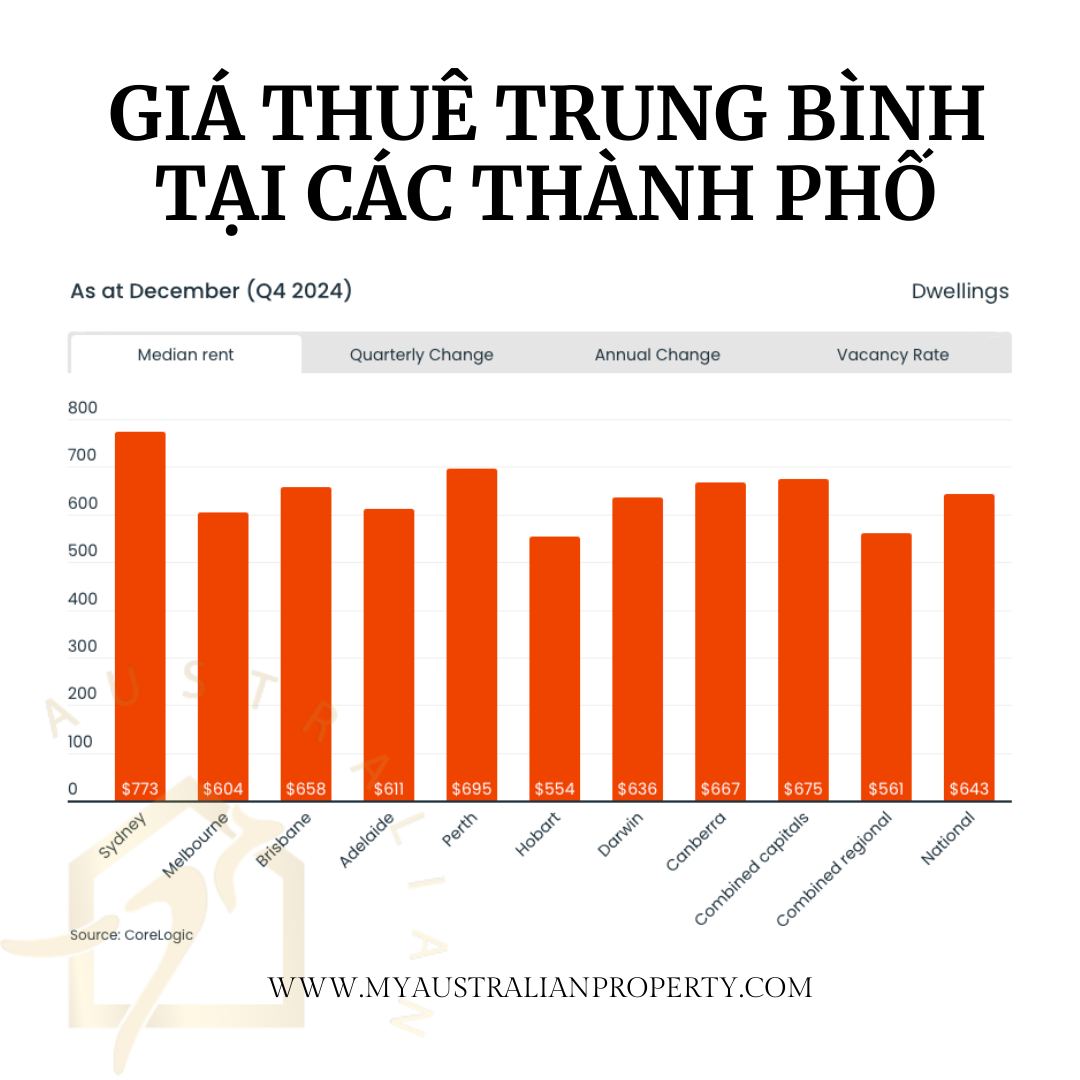
Although rents fell slightly on a quarterly basis, Sydney remains the most expensive capital region to rent, with an average weekly rent of $773. Stronger rent increases helped Perth take second place with $695/week, surpassing Canberra with $667/week.
A few cities that saw rental growth during the year were Hobart (6.0%) and Canberra (2.6%).
Hobart remains the capital region with the best rental prices and is the only capital city to record an average weekly rent below $600, specifically $554/week. Melbourne comes in second with rent at $604/week, followed by Adelaide at $611/week.
Source: CoreLogic. 2024. National rental market has “well and truly passed the peak of the recent rental boom”
Related articles


Treasurer Jim Chalmers officially announced the 2026 Australian Federal Budget, focusing on reforming the tax system and enhancing national security in the context of inflation and global geopolitical turmoil. Housing Policy Reform The government focuses on addressing the housing and tax system to support the younger generation (Millennials and Gen Z) through systemic changes. From […]

The Federal Government has officially announced its 2026-2027 budget, with reforms to Australia’s real estate, tax system and increased housing supply aimed at helping more Australians own their homes. Support home ownership and increase supply Australian property tax reform: Change regulations on negative gearing and capital gains tax (CGT) incentives. The changes are estimated to […]

The birth of the Metro West line is not simply a transportation solution; it is symbolic of Sydney’s transformation into a connected megacity. With a record investment of up to 27.3 billion Australian dollars, the project promises to unlock the potential for tens of thousands of luxury apartments, turning areas along the route into the […]