
Apartment Prices in Australia Will Surpass House Prices in the Coming Years
MAP: Australia’s housing market is at a “moving point” with declining affordability and increased supply slowing price growth, according to a new report.
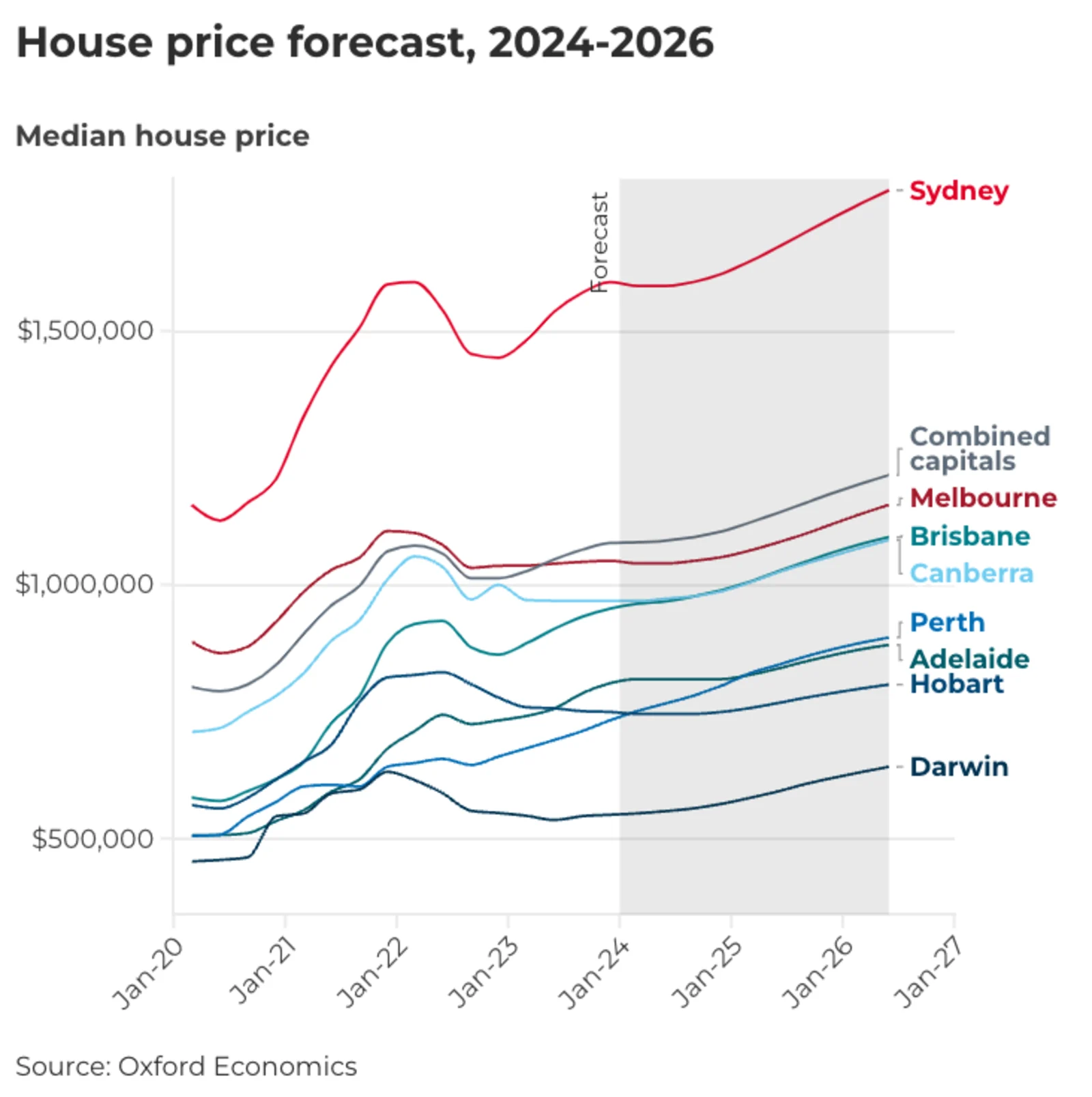
These factors will slow the pace of housing price growth nationwide, with a 2.7% increase in 2024 – about half the 5.52% recorded in 2023 – before returning to 6% in 2025 and 2026.
However, affordability constraints could cause apartment values to surpass house prices in the next few years. In some cities, it will greatly outperform the general market, according to forecasts by Oxford Economics.
And, after years of underperformance, values in the Top End are expected to rebound.
Major City Forecast:
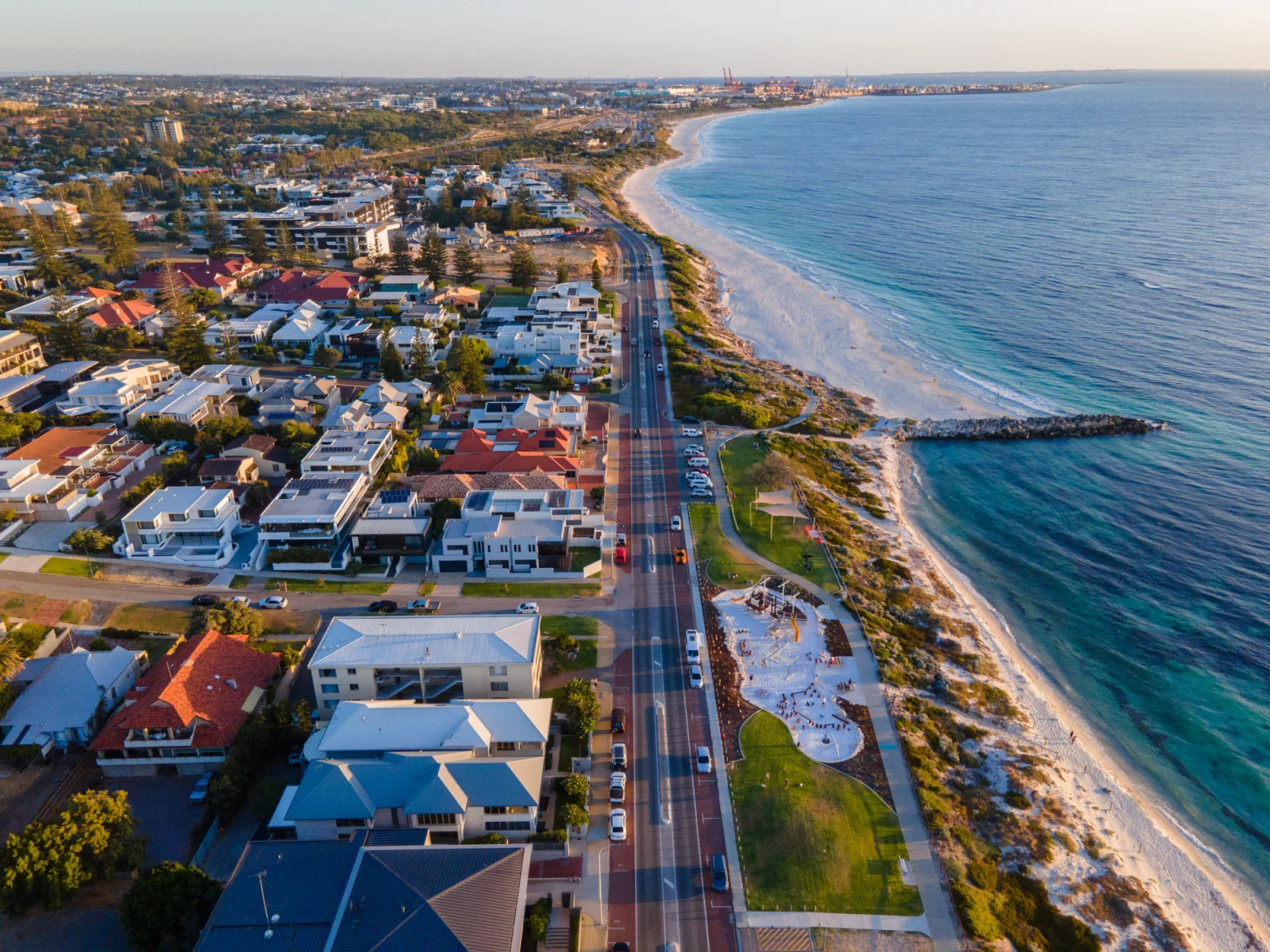
Oxford Economics Australia’s “Residential Property Outlook” report, released on Monday, forecasts Perth house prices will explode 9.3 per cent in 2024, driven by the city’s relative affordability, strong economy and housing supply shortage.
The three cities with the fastest price growth last year – Perth, Adelaide and Brisbane – are expected to continue to be the country’s best performing markets.
See more: Top most expensive areas in Australia
Oxford Economics senior economist and author of the report, Maree Kilroy, said the imbalance between supply and demand in 2024 will drive strong price increases in the cities that performed best last year.
“Price drivers are in Perth, Brisbane and Adelaide,” she said.
“Low advertising levels and relatively stable payouts in some areas will tip the balance there next year.”
According to the report, rapid population growth and low unemployment rates in Western Australia will boost housing demand in Perth. Meanwhile, construction barriers will be a factor driving buyers towards already-built houses, which are in short supply.
Perth’s rapid price growth is forecast to surpass Adelaide’s average house price growth by mid-2025, with house prices in the South Australian capital expected to fall to 1 per cent this year.
House prices in Adelaide increased by almost 11 per cent in 2023, driven by a combination of affordability and limited supply.
Brisbane is expected to record the second fastest house price growth after Perth, with values expected to increase by 3.9 per cent in 2024.
“The Brisbane market continues to benefit from relative affordability compared to southern cities, coupled with job prospects, migration and tight housing supply,” Ms Kilroy said.
Conversely, declining affordability reduces demand in Sydney – Australia’s most expensive city, house prices increased by 7.72% last year – the number of homes for sale also increased, leading to house prices increasing by only 1% in 2024, according to Ms. Kilroy.
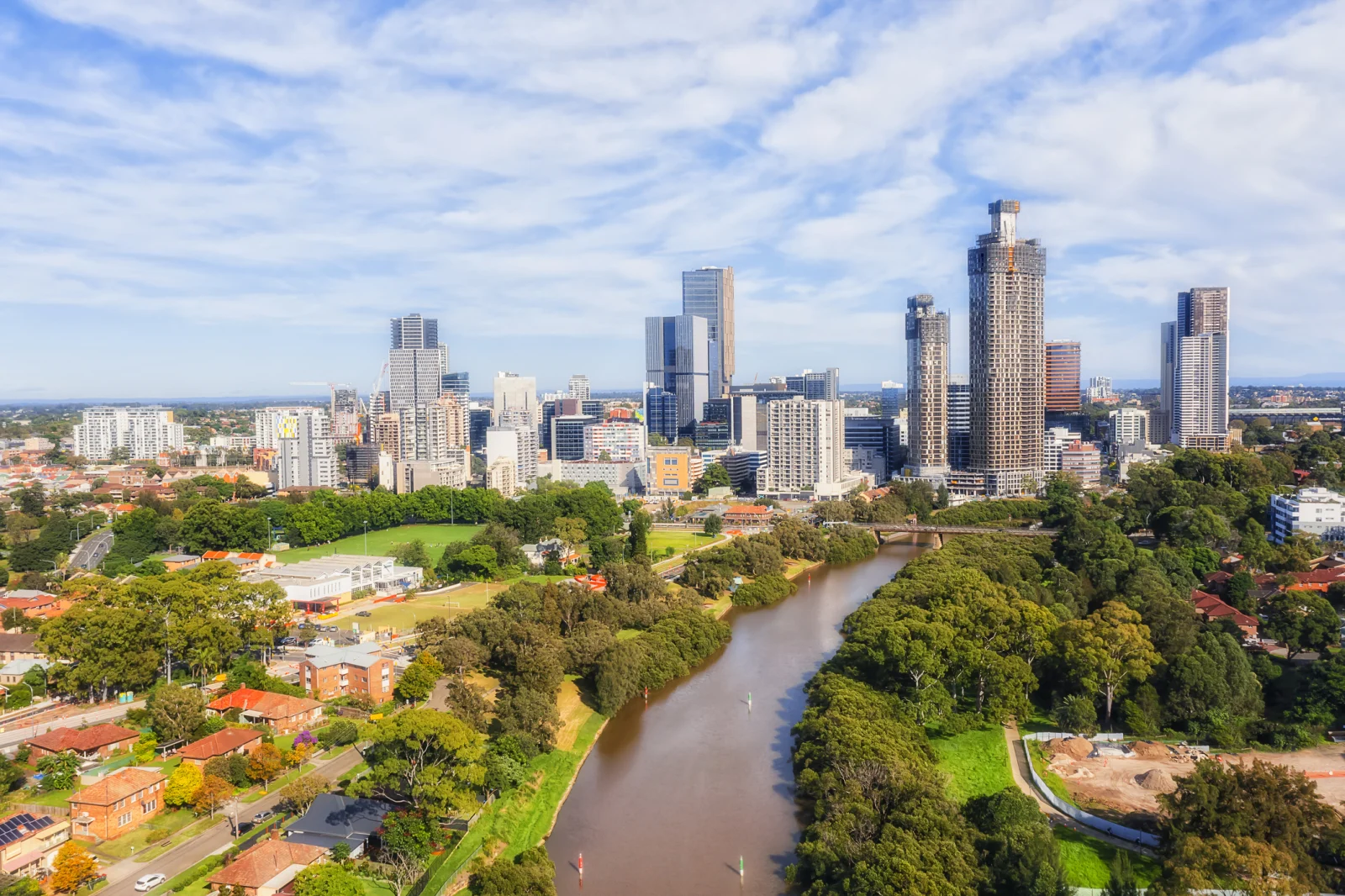
House prices in Melbourne are expected to remain stable with a growth of 0.7% in 2024, due to increased supply and policies affecting real estate investors. However, price growth is expected in the following years.
“Increased listings have provided more choice for Melbourne buyers, which has led to the easing of conditions,” Ms Kilroy said.
“The deceleration in growth in the high-priced segment became apparent, suggesting that, as affordability declines, demand shifts from the high-priced segment to the mid-price segment.”
Although growth is expected to slow across cities, one city is expected to recover from many underperformances.
Ms. Kilroy expects house price growth in Darwin to return from mid-2024, with values expected to increase by 7% in 2025 and 8.2% in 2026, thanks to government investment driving job growth.
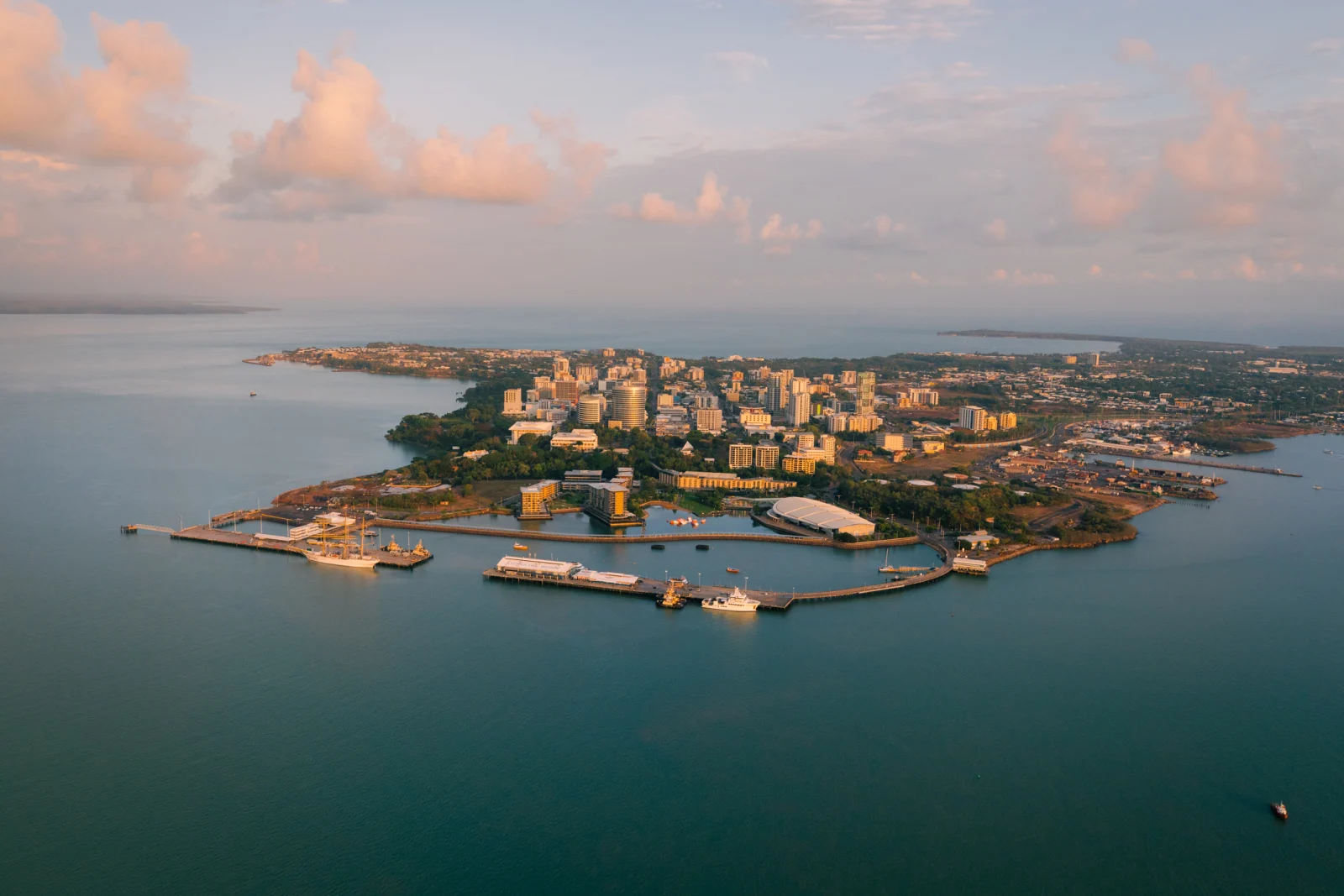
The median value of homes in Darwin fell 1.58 per cent in 2023, according to the PropTrack House Price Index, having yet to recover from the 2022 recession.
More than $6 billion is expected to be spent on defense projects in the Northern Territory over the next few years, creating about 7,500 new jobs, a boost expected to benefit the housing market here.
Apartment Prices in Australia Will Surpass House Prices
Although house price growth across the capital is expected to remain at 2.1% in 2024, apartment prices are expected to increase faster at 4.6%.
Apartment prices are expected to outpace house prices, in Sydney (6%), Brisbane (5.1%), Adelaide (3%) and Melbourne (2%), while apartment prices are expected to increase dramatically by 8.5% in Perth.
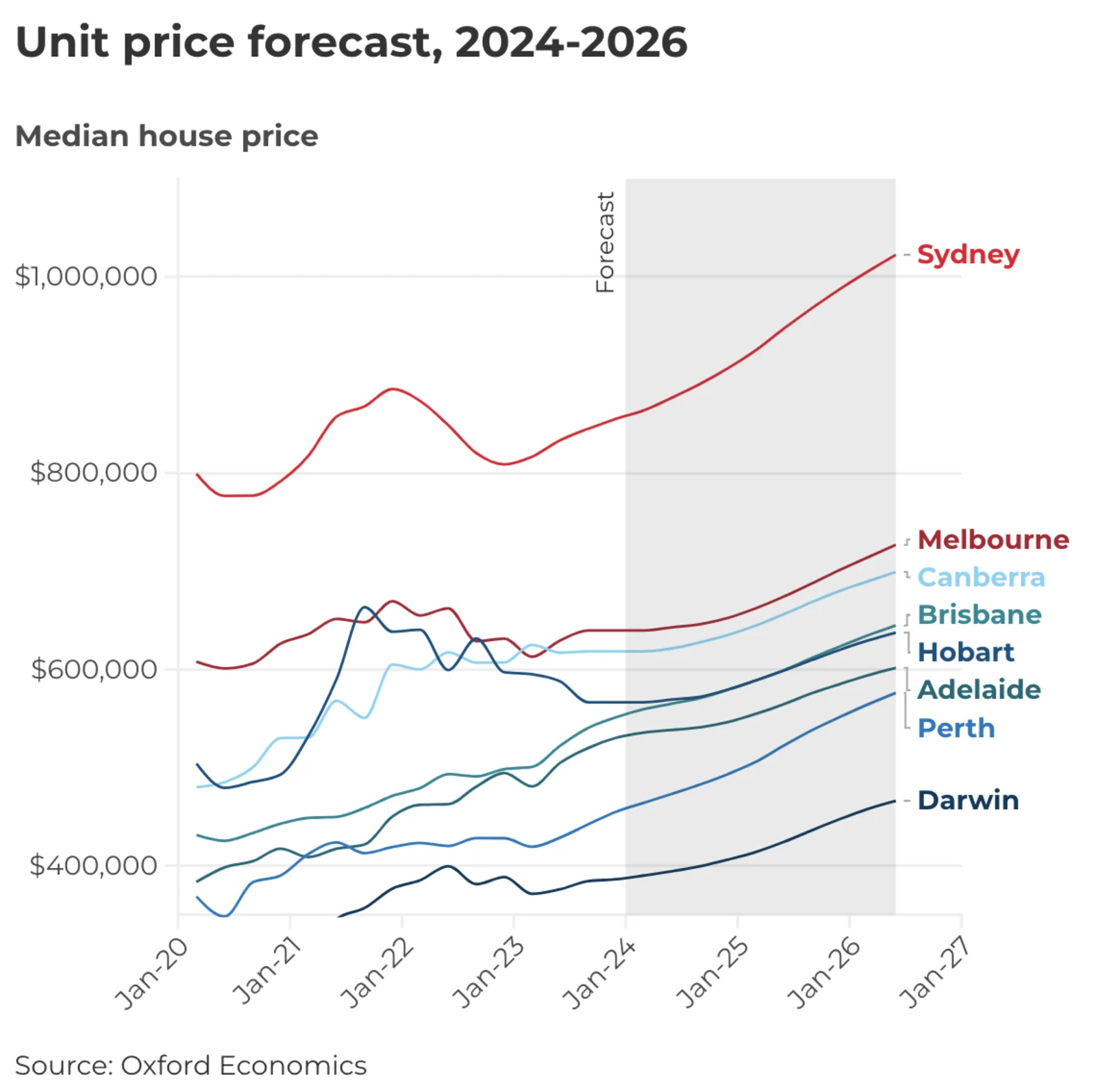
Nationally, apartment prices are expected to increase rapidly by 7.6% in both 2025 and 2026, led by Perth, where apartment values will increase 9.7% per year, Sydney (8.3% per year), Brisbane (8.2% per year) and Darwin (8% per year).
Apartment prices are lower than house prices, because high house prices and high interest rates make buying a house increasingly difficult.
Buyers are shifting towards large, isolated properties, which is the ideal condition, causing the number of houses to surpass apartments in most of the capital last year.
Reduced borrowing capacity makes apartments more attractive, especially as the average apartment price is nearly $200,000 cheaper than the average house price, and more than $500,000 less than Sydney.
Australian Real Estate Market Outlook
The latest Property Market Outlook also predicts slower growth across Australia in 2024, despite last year’s trend of higher prices in most cities.
“The national housing market looks likely to see lower price growth in 2024 compared to the significant gains in 2023,” PropTrack Director of Economic Research and report author Cameron Kusher said.
“Despite the slow growth rate, a number of factors could cause real estate prices in the high segment to increase in 2024.”
“In the second half of the year, the market may receive positive feedback from the implementation of phase three tax cuts,” Mr. Kusher said.
This tax relief, which would increase the real income of high-income earners, improving home affordability, could increase home-buying budgets, especially for home upgraders who have been taking advantage of equity gains since the pandemic began.
Source: https://www.realestate.com.au/
Related articles


Treasurer Jim Chalmers officially announced the 2026 Australian Federal Budget, focusing on reforming the tax system and enhancing national security in the context of inflation and global geopolitical turmoil. Housing Policy Reform The government focuses on addressing the housing and tax system to support the younger generation (Millennials and Gen Z) through systemic changes. From […]

The Federal Government has officially announced its 2026-2027 budget, with reforms to Australia’s real estate, tax system and increased housing supply aimed at helping more Australians own their homes. Support home ownership and increase supply Australian property tax reform: Change regulations on negative gearing and capital gains tax (CGT) incentives. The changes are estimated to […]

The birth of the Metro West line is not simply a transportation solution; it is symbolic of Sydney’s transformation into a connected megacity. With a record investment of up to 27.3 billion Australian dollars, the project promises to unlock the potential for tens of thousands of luxury apartments, turning areas along the route into the […]