
INVESTOR ALLIANCE REVEALS $25 BILLION PLAN FOR THE FUTURE OF WEST SYDNEY
In a launch, the Rosehill-Camellia Landlords Alliance (RCLA), comprising Wentworth Properties, Billbergia, Abacus Property and the Australian Turf Club, is calling for a partnership with the New South Wales State Government to produce a master plan for a massive $25 billion project, spanning 90 hectares in Western Sydney.
Expected to be completed by 2050 at Rosehill Racecourse and Camellia Town centre, RCLA is expected to deliver vibrant community development, a new ferry terminal, light rail and Metro stations for waterway access on the Parramatta River.
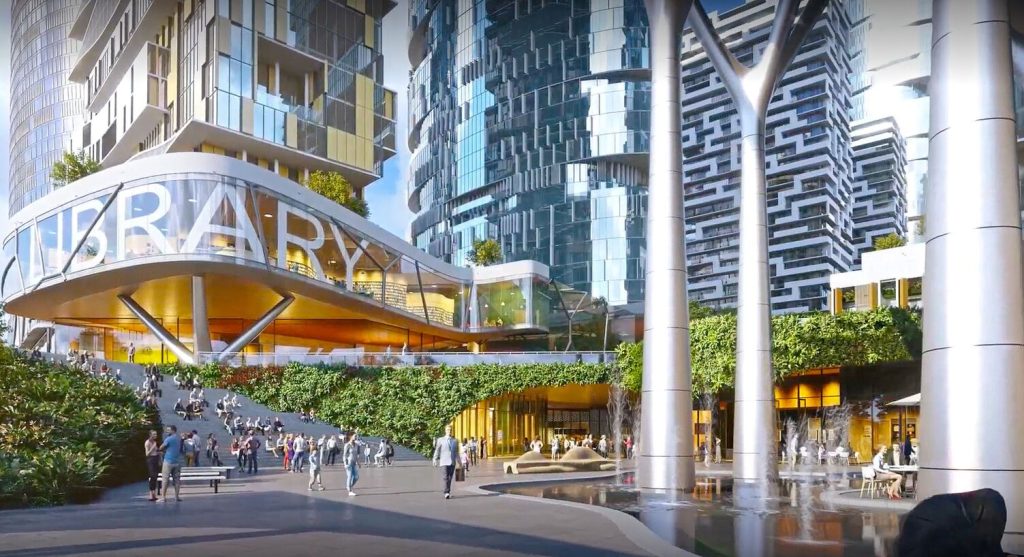
The master plan envisages the Town center acting as a nucleus with 45,000 new homes, including affordable housing. The project integrates retail, educational and commercial spaces, accompanied by community facilities, public spaces and key infrastructure.
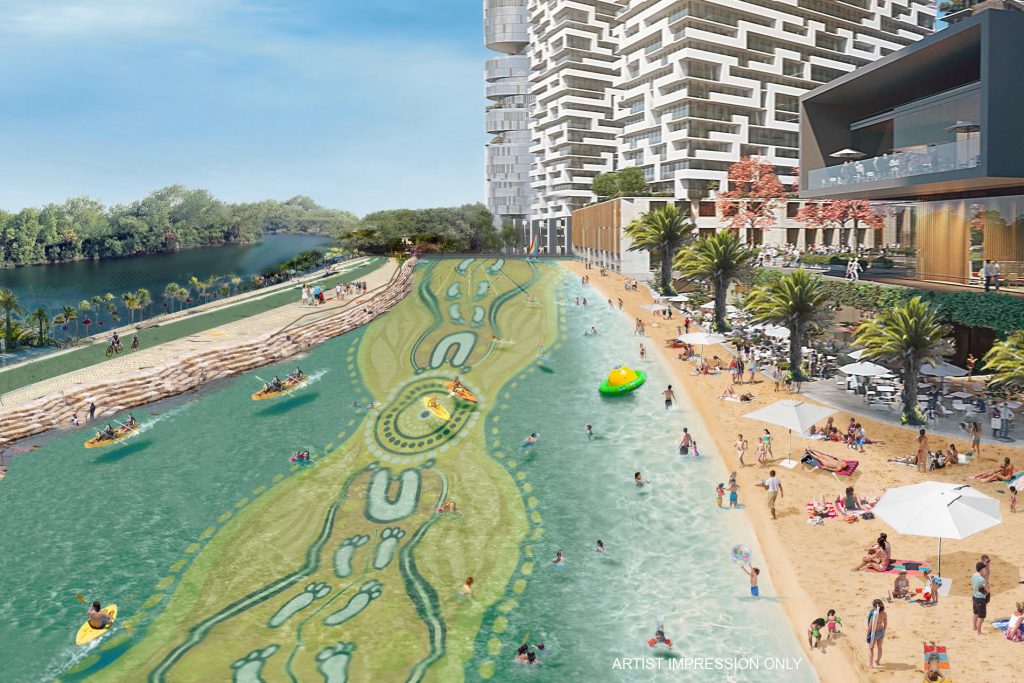
Best of all, the proposed public space includes a 350m long beach and 1.5km along the banks of the Parramatta River, transforming the landscape of Rosehill-Camellia.
“This is a once-in-a-generation opportunity to develop a comprehensive ‘city within a city’ strategy, while also opening up waterway access – transforming an area that has been a former industrial wasteland. This will help Parramatta fulfill its mission as a global city alongside Sydney,” said Rick Graf, Chief Development Officer of Billbergia.
“In terms of scale, the total area is four times larger than Barangaroo, can accommodate 100,000 people, creating more than 15,000 jobs.”
“This will be the largest development project in the history of the Central River City and is an important game-changer for Western Sydney,” he said.
This transformative project is expected to stimulate a super economic hub in Western Sydney, allowing seamless travel between Westmead, Parramatta and Camellia via the new Metro line.
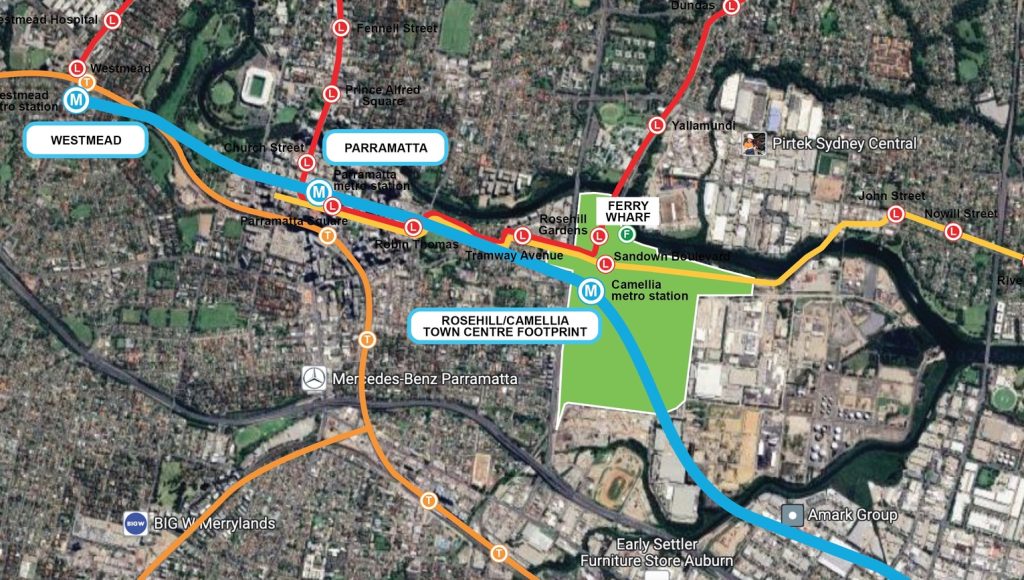
Camellia, once an industrial area that has faced a decline in employment opportunities since the 1970s, is now preparing for a resurgence. With strategic transport infrastructure such as Parramatta light rail and Metro West, the masterplan aims to outline a comprehensive strategy for the region’s progress over the next 50 years, supporting housing supply and contributing to the advancement of the Central River City.
RCLA members are calling on the New South Wales State Government to work with the developer and Council to develop an innovative master plan that maximizes the region’s potential. RCLA members include Wentworth Properties, Billbergia, Abacus and the Australian Turf Club.
“We want to apply international practices so that we can create value for both the Government and the economy. The new master plan requires cooperation at the highest level between the government and investors, and requires high-level expertise to realize the big vision,” Mr. Graf said.
The importance of Camellia-Rosehill in the Parramatta and Olympic Peninsula (GPOP) economic pathway is paramount. By 2041, the region will grow with service industries and a circular economy, new entertainment facilities, facilitated through infrastructure upgrades such as light rail, public transport and road connections.
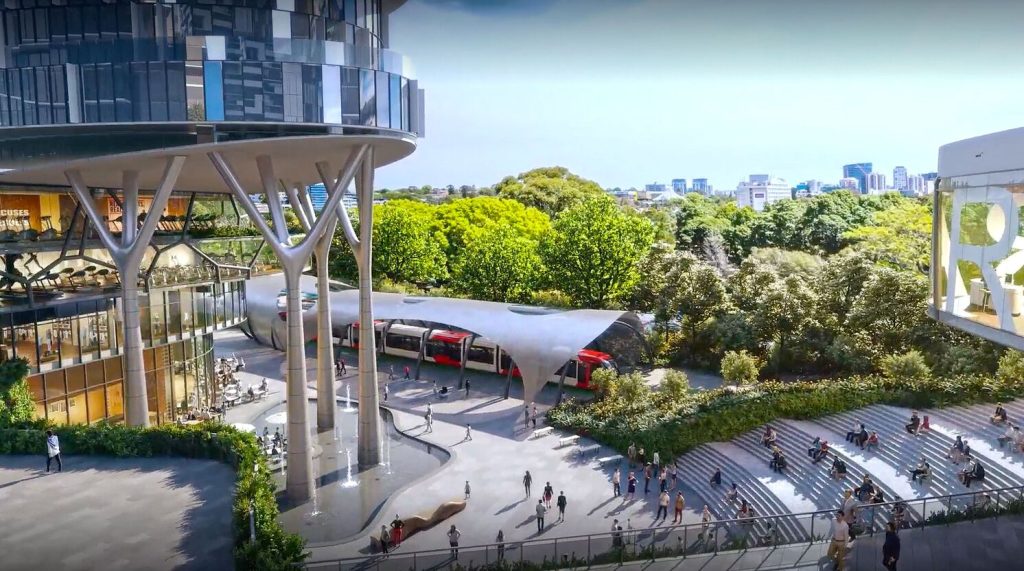
The excellent town center design, close to the light rail station, serves as a focal point for community activity, ensuring easy connections between housing, work and public transport. New public open spaces, community facilities, enhanced walking and cycling areas.
In addition, the development of a new urban service area and the retention of heavy industrial land aims to strengthen Camellia-Rosehill as an employment hub. The masterplan emphasizes the conservation and improvement of key environmental features such as the Parramatta River, Duck River and wetlands. Camellia’s rich cultural heritage will be preserved and promoted, with all innovations receiving input from the Aboriginal community.
Source: australiandevelopmentreview.com.au
Related articles


Treasurer Jim Chalmers officially announced the 2026 Australian Federal Budget, focusing on reforming the tax system and enhancing national security in the context of inflation and global geopolitical turmoil. Housing Policy Reform The government focuses on addressing the housing and tax system to support the younger generation (Millennials and Gen Z) through systemic changes. From […]

The Federal Government has officially announced its 2026-2027 budget, with reforms to Australia’s real estate, tax system and increased housing supply aimed at helping more Australians own their homes. Support home ownership and increase supply Australian property tax reform: Change regulations on negative gearing and capital gains tax (CGT) incentives. The changes are estimated to […]

The birth of the Metro West line is not simply a transportation solution; it is symbolic of Sydney’s transformation into a connected megacity. With a record investment of up to 27.3 billion Australian dollars, the project promises to unlock the potential for tens of thousands of luxury apartments, turning areas along the route into the […]