
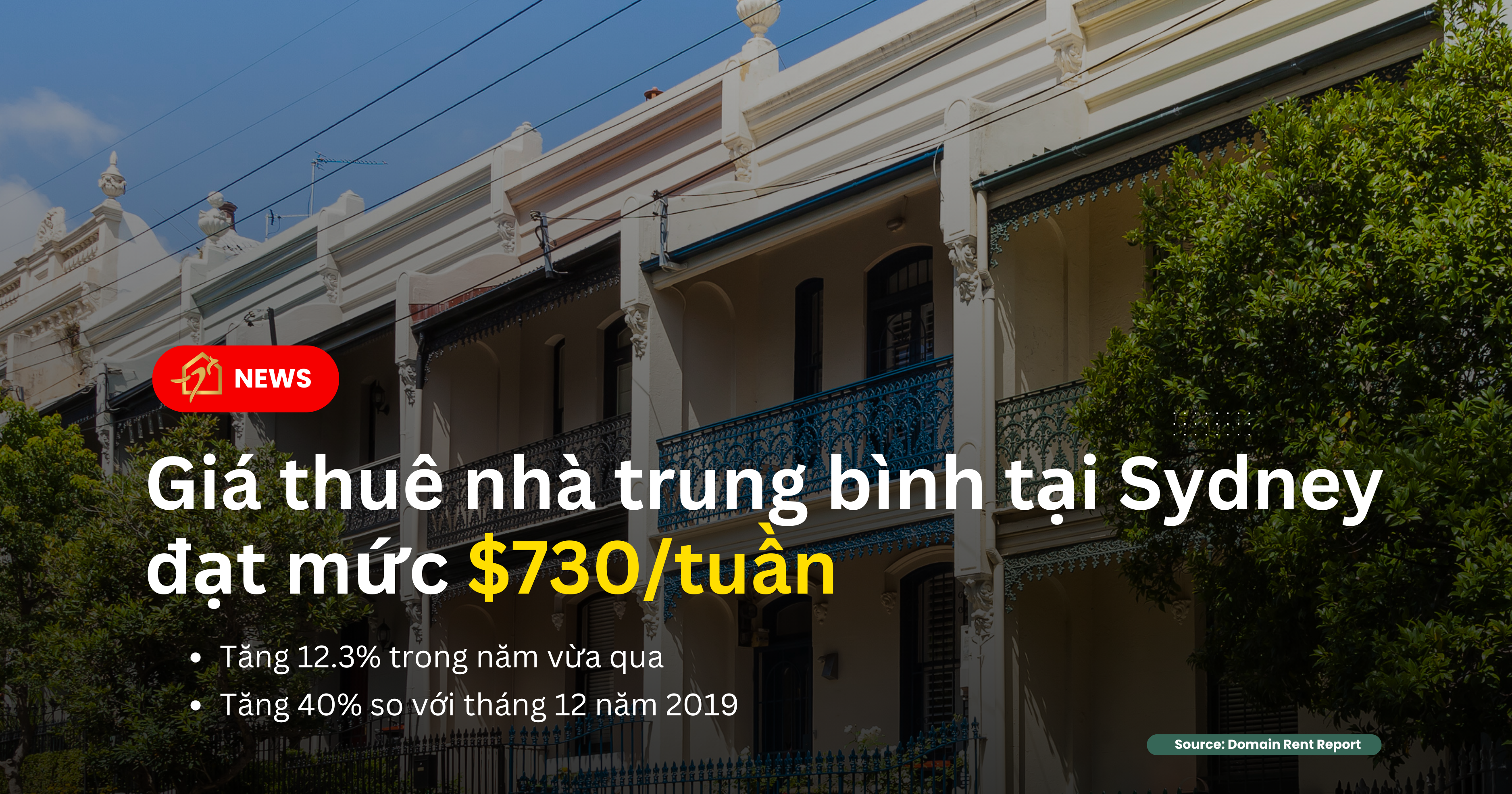
SYDNEY TENANTS STRUGGLE WITH AUD 730 INCREASE.
(MAP) – Sydney rents hit a new peak, rising by up to $100 per week in some areas in just three months.
The current situation of Sydney house rental prices
However, the pace of rent growth has slowed for the second consecutive quarter as cost-of-living pressures have been extremely harsh.
The average rent in Sydney has reached a record $730 per week, up 1.4 per cent in the December quarter and 12.3 per cent year-on-year, according to the latest Domain Rent Report released on Thursday. Current rent is 40% higher than December 2019.
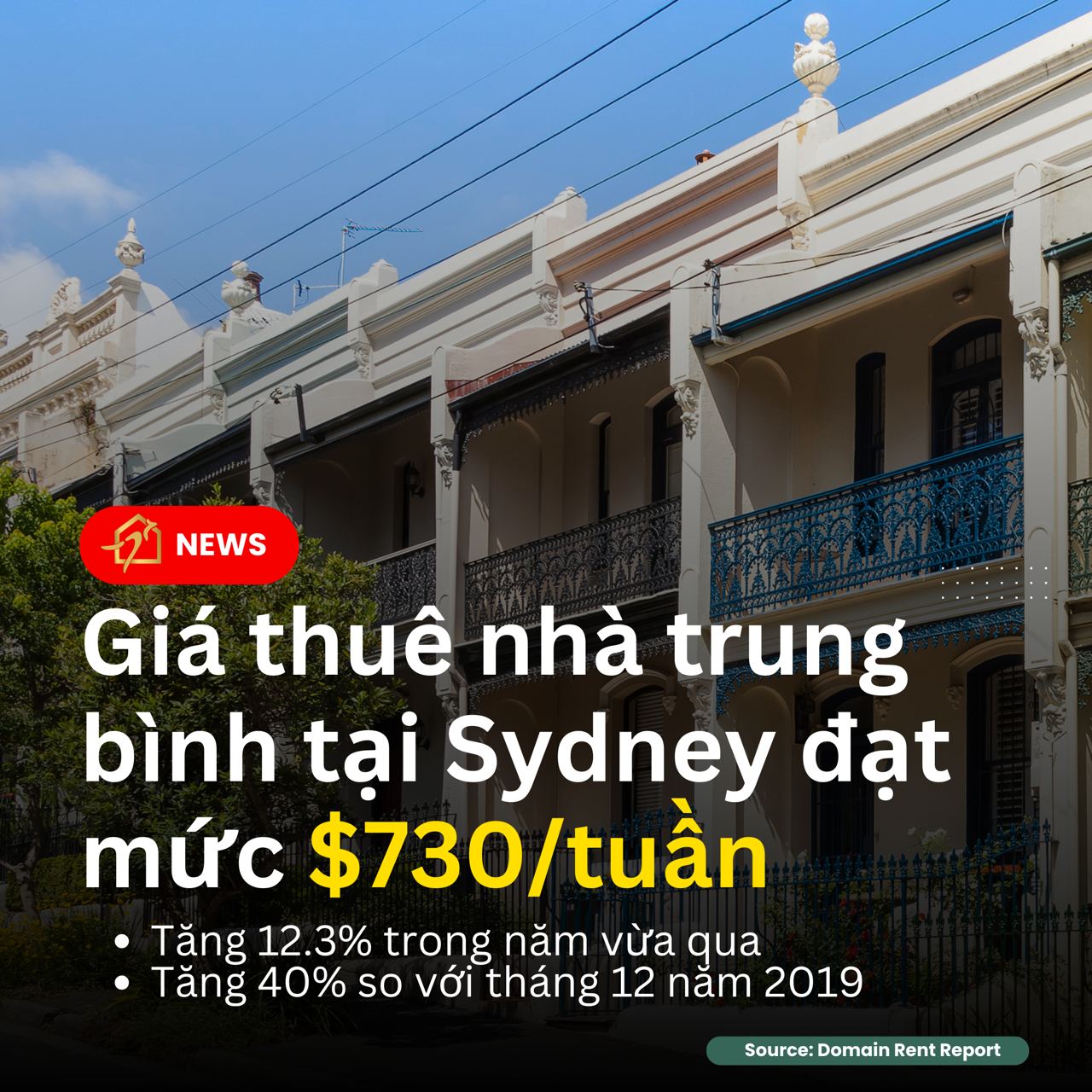
In the apartment market, average rents were unchanged over the quarter, reaching a high of $680, after two and a half years of growth – ending Sydney’s longest streak of rent increases recorded in Domain history. Average rent increased 17.2% over the same period last year and 33% since December 2019.
Dr Nicola Powell, Director of Research and Economics at Domain, attributed the slowdown to affordability constraints, very low vacancy rates, along with an imbalance between housing supply and demand.
“Affordability barriers are clearly evident. Rents cannot continue to increase at the same rate as before, it is unsustainable.”
“Tenants have had to adjust themselves, by finding someone to live with, moving to a cheaper location or type of property, which is something we’ve seen continue to happen.”
The return of investors in 2023, accompanied by an increase in the number of large households, as people share rising costs, has contributed to reducing demand.
Low net overseas migration, falling interest rates and new first-home buyer support schemes could make buying a home easier for some renters later this year, Dr Powell added.
The city’s vacancy rate hit a 12-month high of 1.3%, but that was the lowest in December, leaving “renters facing unprecedented competition,” she said.
During the quarter, rents increased sharply in areas such as the east side, downtown and inner south – rents increased by $100 per week, after falling in the previous quarter. Rents stabilized in areas such as Parramatta and Ryde, although both recorded significant growth during the year.
Sharing from tenants at St Leonards
According to Mr. Ayaki Ito – a tenant at St Leonards, he had to accept a 33% increase for his one-bedroom apartment, after two increases from $420 to $460, then $560 per week. Apartment rental prices in this area are estimated to increase by 26.9% over the same period last year.
Mr. Ayaki Ito, 27 years old, works in marketing, moved here in 2021 when rents were “dropping sharply” amid the pandemic. He understood about rent increases and felt there was no point in trying to negotiate.
“The housing shortage makes me feel like tenants don’t have much say in negotiations…[chủ nhà] even said that he could look for another tenant if he did not accept this price, and of course choosing to move somewhere else is really risky in the current context.”
Although it is possible to manage finances in this situation, it has pushed Ayaki Ito to his limit, while cutting down on his ability to save. If rent prices continue to increase, he will consider moving elsewhere.
“My salary is probably competitive for my age, I live in a fairly normal place but sometimes there is a shortage of cash flow to make ends meet,” he said.
Tenant protection measures should be discussed
AMP senior economist Shane Oliver expects Sydney rents to continue to rise, but at a slower rate, forecasting annual growth of 5-7%.
“Growth seems to be cooling, reflecting cost-of-living pressures, signs that rental demand may be softening and the market is facing an affordability challenge.”
“Wage income is not keeping pace with living costs…So the possibility of renters having to pay higher rent is something to consider.”
Grattan economic policy program director Brendan Coates said that while advertised asking rents are leveling off, actual rents will continue to rise until they catch up with market prices.
“The fact that advertised rents have stopped is a positive sign, but we can expect actual rents to continue to increase for a year or two,” he said.
“If rents stay at that level, we will see a 20% increase in real rents, but if rents fall, they will converge to a lower level.”
New South Wales Tenants Association Policy and Advocacy manager Jemima Mowbray said slowing rent increases would not do much good.
“These are still extremely high prices and people are struggling,” she said. “[Những người phải chuyển đến nơi mới] really worried… looking at the market, it’s clear they can’t afford it.”
Mowbray said the lodging hotline has been overwhelmed, as tenants continue to seek help with rent increases, repairs and unwarranted evictions. Some people risk becoming homeless when their lease is not renewed before finding a new place to live.
“New South Wales needs to make better tenant protections, such as making unreasonable evictions a top priority,” she said.
Rent regulation also needs to be discussed, Mowbray added, noting that housing supply is only part of the solution.
Source smh.com.au
Related articles


Treasurer Jim Chalmers officially announced the 2026 Australian Federal Budget, focusing on reforming the tax system and enhancing national security in the context of inflation and global geopolitical turmoil. Housing Policy Reform The government focuses on addressing the housing and tax system to support the younger generation (Millennials and Gen Z) through systemic changes. From […]

The Federal Government has officially announced its 2026-2027 budget, with reforms to Australia’s real estate, tax system and increased housing supply aimed at helping more Australians own their homes. Support home ownership and increase supply Australian property tax reform: Change regulations on negative gearing and capital gains tax (CGT) incentives. The changes are estimated to […]

The birth of the Metro West line is not simply a transportation solution; it is symbolic of Sydney’s transformation into a connected megacity. With a record investment of up to 27.3 billion Australian dollars, the project promises to unlock the potential for tens of thousands of luxury apartments, turning areas along the route into the […]