
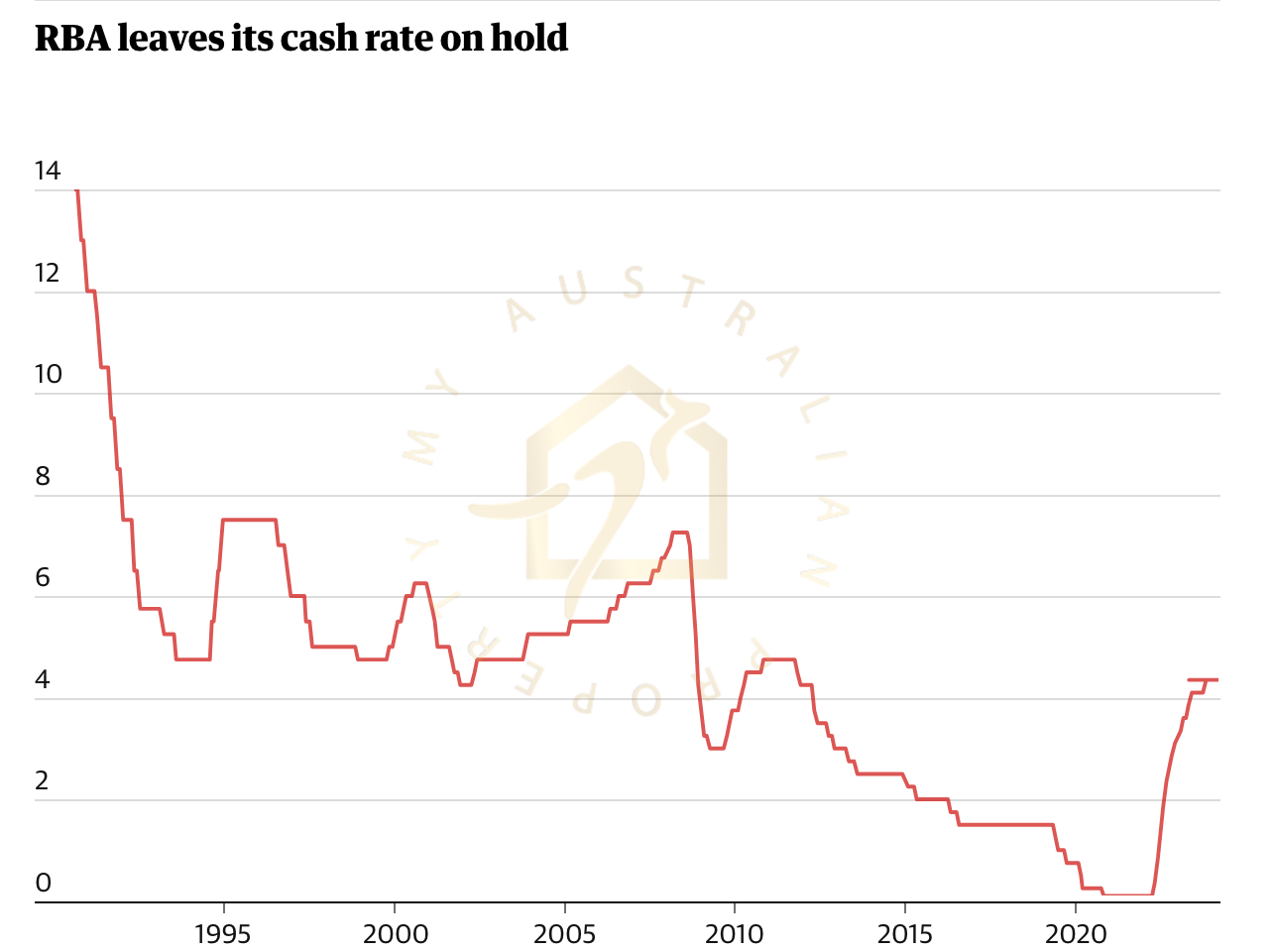
THE RESERVE BANK OF AUSTRALIA ISSUED ANNOUNCEMENT TO MAIN OPERATING INTEREST RATE AT 4.35%
Mortgage borrowers avoided an interest rate hike as the Reserve Bank of Australia decided to keep interest rates unchanged for the fourth consecutive meeting.
 Borrowers avoid the 14th interest rate increase and possibly higher because the Reserve Bank of Australia is tending to “tighten” in the context of inflation falling more slowly than expected.
The RBA (Reserve Bank of Australia) decided to keep interest rates unchanged at 4.35% for the fourth consecutive meeting on Tuesday, a result expected by many. Only one economist, Capital Economics, predicts the Central Bank will raise interest rates.
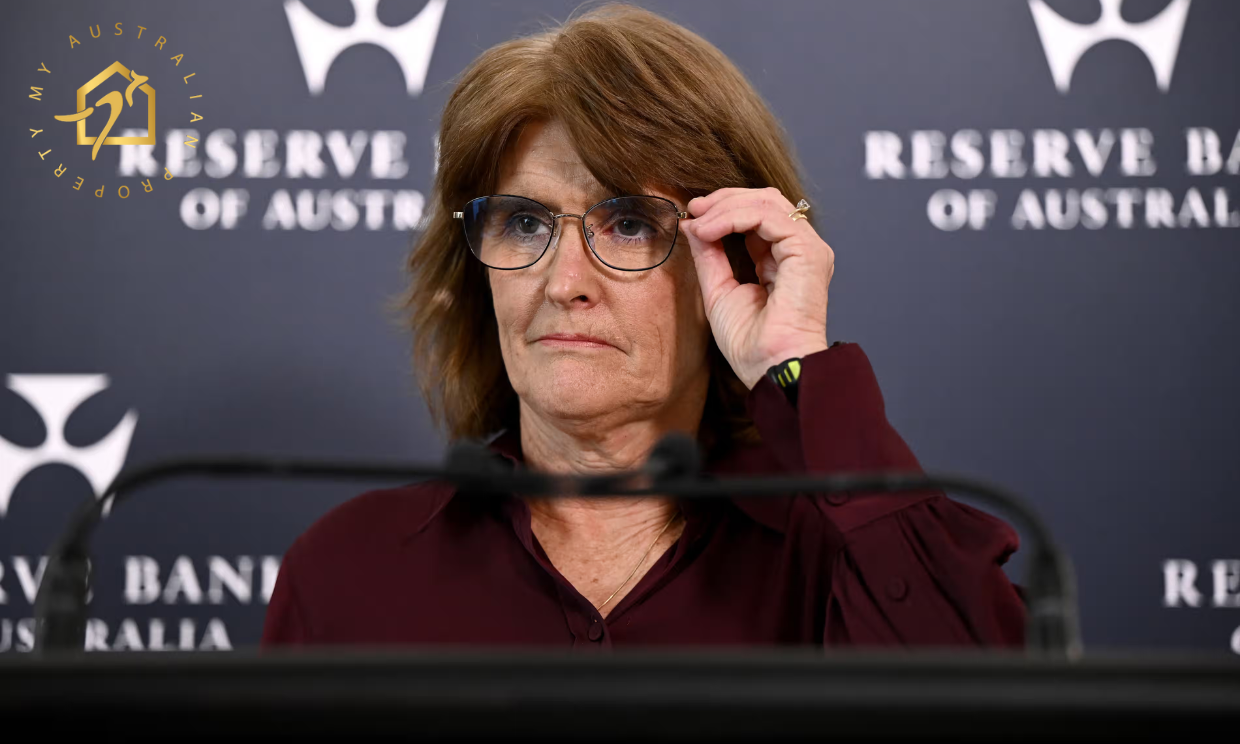
Governor Michele Bullock said shortly afterward at a press conference in Sydney that the RBA had maintained a neutral position although the agency considered the possibility of raising interest rates at this meeting.
“At the last meeting, we thought things were pretty balanced and had to be very careful in making decisions at this point,” said Bullock.
The RBA’s statement was essentially unchanged, while the bank remained “vigilant to the risks” to inflation.
“Recent information shows that inflation is under control, but the index decreased more slowly than expected,” the organization said.
The lack of hawkish stances pushed the Australian dollar down to 66.1 US cents from 66.3 US cents before the decision was announced. This decrease continued when Bullock spoke to just 65.9 US cents. Shares rose further, ending the day 1.4% higher from 0.8% just before the interest rate ruling.
Before the release of higher-than-expected inflation figures for the third quarter last month, most economists and investors forecast the RBA would cut interest rates as soon as September.
More surprisingly, core inflation at 4% annually has some predicting the RBA will raise interest rates at least one more time, and the inflation target will not fall below the RBA’s 2% – 3% range until the end of 2025.
Australia raised interest rates a bit late and mostly lower than other central banks, even if inflation was higher. For example, in the US interest rates are 5.25% – 5.5% and inflation is 3.5%; In the UK interest rates are 5.25% and inflation reaches 3.2%.
However, the RBA argues that the impact of fluctuating interest rates and the fastest increase in borrowing costs in three decades is leading to pressure on Australians. The Central Bank of Australia has two goals: trying to maintain interest rates and fighting inflation.
According to the RBA’s monetary policy statement and a report accompanying today’s interest rate decision, the RBA has reduced Australia’s GDP growth target, and this measure also helps reduce the increase in inflation in the near future.
The central bank does not predict any interest rate cuts in 2024, and will even adjust interest rate increases.
Currently, RBA expects the consumer price index to increase to 3.8% compared to March’s actual result of 3.6%. In forecasts released in February, the RBA predicted that CPI would fall to 3.3% by mid-year.
The delay in curbing inflation lasts until the end of 2024, with current forecasts for CPI to be 3.8% and core inflation to be 3.4%. Also in February, the RBA expected the two indexes to be 3.2% and 3.1%, respectively.
Notably, the Reserve Bank of Australia still expects that the two inflation indexes will return to the target range of 2% to 3% by the end of 2025. At that time, both indexes will be 2.8%.
However, what is disappointing for households is the slowdown in real wage growth, suggesting wages are on par with inflation. The 2023 real wage index is only 0.1%, increasing to 0.4% in June and ending the year in line with inflation.
See more about the process of owning Australian real estate for Vietnamese people: HERE
Source: Peter Hannam Economics correspondent. (2024). RBA leaves interest rate on hold at 4.35% despite higher than expected inflation. From: theguardian.com
Disclaimer:
Article content is based on reliable information sources. However, the information herein is for general reference only and should not be considered official or complete. Use of the content and information on this website is the sole responsibility of the reader. We are not responsible for any consequences, damages or losses caused to readers or any third parties related to the use of information on this article or website, whether directly or indirectly.
Related articles


Treasurer Jim Chalmers officially announced the 2026 Australian Federal Budget, focusing on reforming the tax system and enhancing national security in the context of inflation and global geopolitical turmoil. Housing Policy Reform The government focuses on addressing the housing and tax system to support the younger generation (Millennials and Gen Z) through systemic changes. From […]

The Federal Government has officially announced its 2026-2027 budget, with reforms to Australia’s real estate, tax system and increased housing supply aimed at helping more Australians own their homes. Support home ownership and increase supply Australian property tax reform: Change regulations on negative gearing and capital gains tax (CGT) incentives. The changes are estimated to […]

The birth of the Metro West line is not simply a transportation solution; it is symbolic of Sydney’s transformation into a connected megacity. With a record investment of up to 27.3 billion Australian dollars, the project promises to unlock the potential for tens of thousands of luxury apartments, turning areas along the route into the […]